
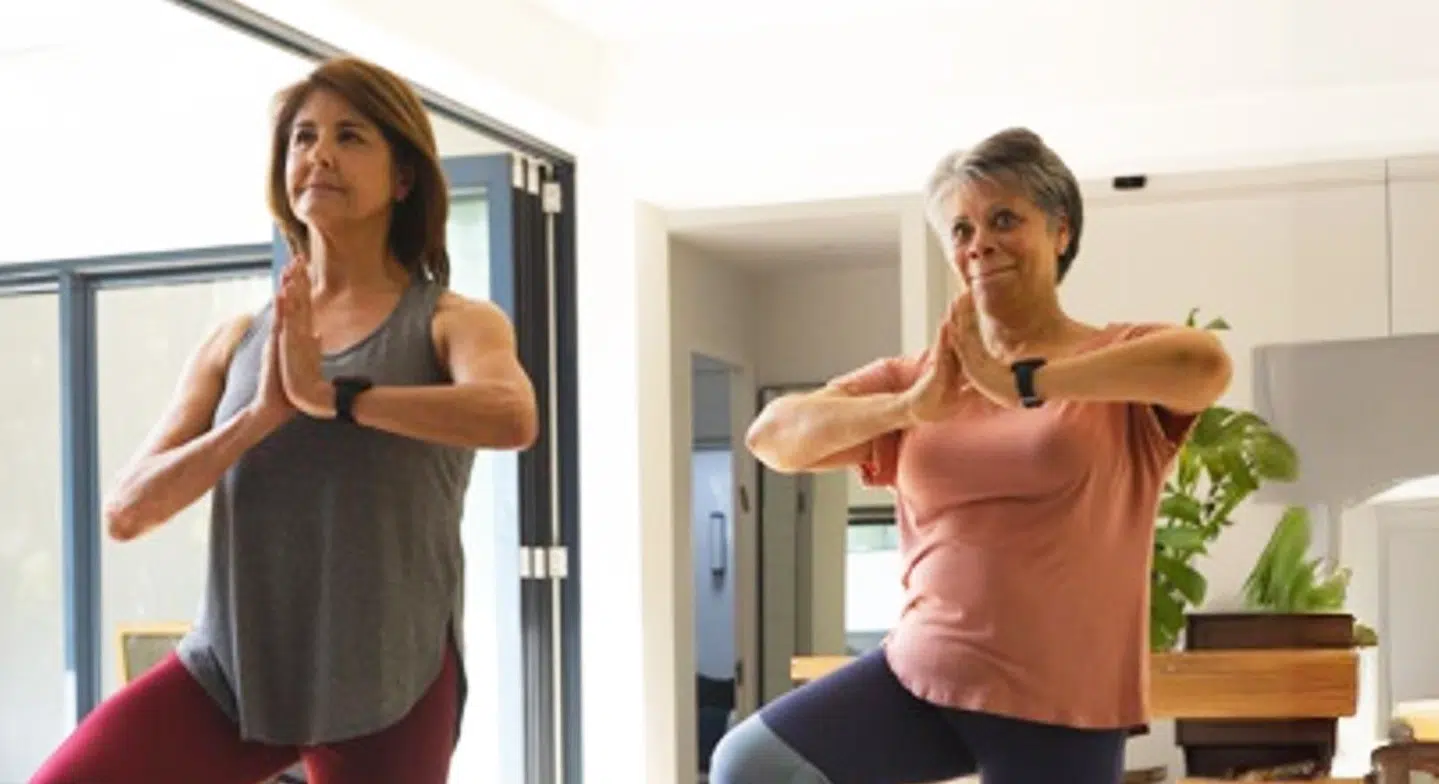
Anyone who has added yoga or tai chi into their daily routine will tell you how beneficial it is to their overall mental and physical wellbeing. As we age, engaging in relaxing, meditative exercises can become even more advantageous in relieving stress, while improving flexibility, strength, and balance. That is why it won’t be a surprise to you that it also benefits individuals living with dementia.
Relaxation exercises for individuals living with dementia are known to decrease agitation, anxiety, and restlessness while enhancing overall emotional comfort. The most effective techniques are simple, repetitive, and calming, with clear guidance and gentle pacing.
Yoga (and Chair Yoga)
Yoga is a centuries-old practice that began in India and focuses on connecting the body and mind through gentle movement, controlled breathing, and meditation. By combining gentle physical poses with relaxation and mindful breathing, yoga supports physical health, flexibility, and strength while also encouraging calmness and mental clarity. Its overall goal is to create a sense of balance and well-being throughout the body and mind.
Yoga can significantly improve the quality of life for both individuals living with dementia and their caregivers. It can be performed on a mat or, for those with balance or mobility challenges, from the security of a chair.
Research cited by Johns Hopkins Medicine notes nine primary benefits of yoga, summarized below:
Tai Chi and Qigong
These are mind–body intervention techniques that share the core features of Chinese martial arts and meditative movements through smooth and continuous body movements and breathing. There are many similarities between Tai Chi and Qigong in how they focus on the body (posture and movement), breath, and mind (meditation and mindfulness).
The National Institutes of Health (NIH) cites studies noting several health benefits for individuals with dementia, summarized below:
And you’ll discover the added value in the slow, rhythmic breathing.
In addition to improving balance, strength, and flexibility the slow, controlled breathing involved in these activities activates the body’s natural relaxation response and reduces physical tension. Family caregivers can guide their loved one to sit in a comfortable position, inhale slowly through the nose, and allow the abdomen to gently expand. A slow, steady exhale through the mouth should follow. Repeating this pattern several times can promote a sense of calm and stability.
If you are just beginning these relaxation exercises, it is important to consider your loved one’s abilities, preferences, and safety needs. Activities should be flexible, reassuring, and adapted to provide comfort, enjoyment, and a sense of success.
How to get started?
There are a variety of ways to begin enjoying the benefits of relaxation exercises. Check your community website for more information on classes and other resources. There are also plenty of online video yoga and tai chi/qigong tutorials and yoga sessions conducted by professionals. And you can enjoy them in the comfort of your own home. Either way, the time to get started is now!
Our Anthem Memory Community residents love their relaxation exercise sessions. Stretching, deep breathing, and connecting with their bodies is a healthy release of tension and stress. Sharing these sessions with fellow residents makes them even more enjoyable and relaxing.
We encourage you to drop by any of our communities and sit in on an exercise session. We craft each session to meet the unique needs and preferences of our residents. We will be happy to share tips to help you and your loved one find calm together through your own relaxation exercises.