



Anthem Memory Care
November 19, 2026
When an individual develops dementia, familiar surroundings gradually become less recognizable. For instance, a hallway with two identical doors may make it difficult to tell one room from another. Poor lighting can hide obstacles, while busy floor patterns may be distracting or confusing. Finding a bathroom, navigating a hallway, or recognizing a doorway may become difficult.
That’s because dementia can also affect vision, balance, and spatial awareness, making it harder to interpret and adjust to their surroundings. This leads to anxiety and can even impact physical health.
That is why the environment plays a major role in memory care communities. A building's layout and design can greatly affect how easily residents move through their day. A well-planned memory care environment can make daily tasks more manageable and help residents maintain independence as their capabilities and needs change.
Many memory care communities, like Anthem, promote dementia-friendly design, which takes into consideration the unique challenges of those living with dementia. The goal is to create a setting that is easier to interpret and navigate, rather than expecting residents to adjust to surroundings that may no longer make sense to them.
1. Easy-to-Navigate Floor Plans Encourage Activity
Connected hallways and clearly marked pathways create an easy walking path, so residents can get up and move around more often, get in more exercise, and feel a sense of freedom of movement in a safe environment.
This can be especially helpful for people who enjoy walking or begin to feel restless. And, if common areas are visible from the hallways, residents may also find it easier to recognize familiar places.
The aim is to support movement while maintaining a secure setting.
2. Natural Light Helps Support Daily Routines
Lighting is another important part of dementia-friendly design.
As people age, their eyes generally need more light to see clearly. Dementia can also affect visual processing, making dim hallways and shadowy corners harder to navigate.
Large windows, skylights, and covered outdoor areas bring daylight and fresh air into shared spaces, helping residents breathe easier, see more clearly, and stay connected to the outdoors. Exposure to natural daylight also helps regulate the body's internal clock, which influences sleep and wake patterns. This can be helpful because sleep disturbances are common among people living with dementia.
Artificial lighting matters, too. An even, consistent light source reduces shadows and glare. Good illumination is especially important in hallways and bathrooms, where poor visibility can increase the risk of falls.
3. A Homelike Setting Can Make the Transition Easier
Moving into memory care is a major change. An unfamiliar building can feel overwhelming, particularly for someone who has difficulty remembering new places.
A homelike setting can make the transition more comfortable. A memory care community should be spacious while still feeling like a welcoming residence. Comfortable furniture and familiar room arrangements can make shared spaces feel less intimidating.
Families can add to that familiarity by bringing photographs or meaningful belongings from home. These personal items can remind residents of people and experiences that matter to them.
4. Colors and Visual Cues Help Residents Recognize Their Surroundings
Color choices may seem like a minor detail, but they can make a difference for someone living with dementia.
Changes in vision and perception can make it difficult to distinguish between objects or surfaces that look similar. For example, a white toilet against a white bathroom wall may be hard to identify. Adding contrast can make it easier to recognize.
Memory care communities use color and visual cues to help residents identify rooms and important features. Contrasting colors can make doorways and bathroom fixtures easier to see. Pictures or simple signs can also help identify destinations; for example, a familiar image on a bathroom door may be more recognizable than written signage alone.
Busy patterns in fabrics and flooring are minimized in a memory care community. Some designs may be misinterpreted as obstacles or changes in floor level. Simple surfaces and limited visual clutter make spaces easier to read.
5. Secure Outdoor Spaces Provide Room to Enjoy the Outdoors
Access to the outdoors is an important part of daily life. Gardens, courtyards, and walking paths give residents a chance to get fresh air and enjoy natural surroundings.
Some residents may enjoy tending to plants, while others prefer simply sitting outside and enjoying some sun and fresh air. For those who like to walk, a secure outdoor area offers another place to move around.
When visiting a memory care community, families should ask whether outdoor spaces are easy for residents to access and how they are supervised. Look for easy-to-navigate paths, along with comfortable seating and shade.
6. Smaller Spaces Can Help Reduce Overstimulation
Smaller living and dining areas can make daily interactions easier and more meaningful. Rather than gathering in one large room, residents have opportunities to spend time in more intimate settings.
Noise reduction is important, too. Background television sounds, loud conversations, and ambient noise from nearby activity areas can become distracting. Thoughtful design can limit competing noise and provide quieter places where residents can relax.
While many assisted living communities also offer memory care services, a stand-alone memory care community is designed entirely around the needs of individuals living with dementia, rather than adapting a setting intended for a broader population.
This includes layout, common areas, and outdoor spaces, all planned with dementia-friendly design in mind. A dedicated community also brings together dementia-certified team members and daily programming focused solely on residents with memory loss.
The combination of skilled, compassionate caregivers in a dementia-friendly environment provides the optimum experience for individuals with dementia, helping them to live their best life each day and in every way. For families, it means peace of mind in knowing that their loved one’s daily living experience is supported in a positive, safe, and caring way.
When visiting communities, look beyond the décor and ask how the building works for someone living with dementia. Are hallways easy to navigate? Is lighting consistent? Can residents find common areas and access safe outdoor spaces? It can be easy to overlook these elements when comparing care services and amenities, but they play a significant role in shaping residents' everyday experiences.
Our Anthem Memory Care communities have been built from the ground up to serve the most important occupants: our residents. Visit an Anthem community, and you will see a combination of open areas with plenty of sunlight, along with smaller, more intimate rooms for working on puzzles and spending quiet time. Our courtyards are brimming with greenery and gardens, and residents can wander safely without losing their sense of direction.
We welcome you to visit any of our Anthem Memory Care communities and experience the difference that purposeful, person-centered layouts and environments are making in the lives of our residents. We’ll be happy to answer your questions and share our expertise in creating a dementia-friendly space for your loved one.
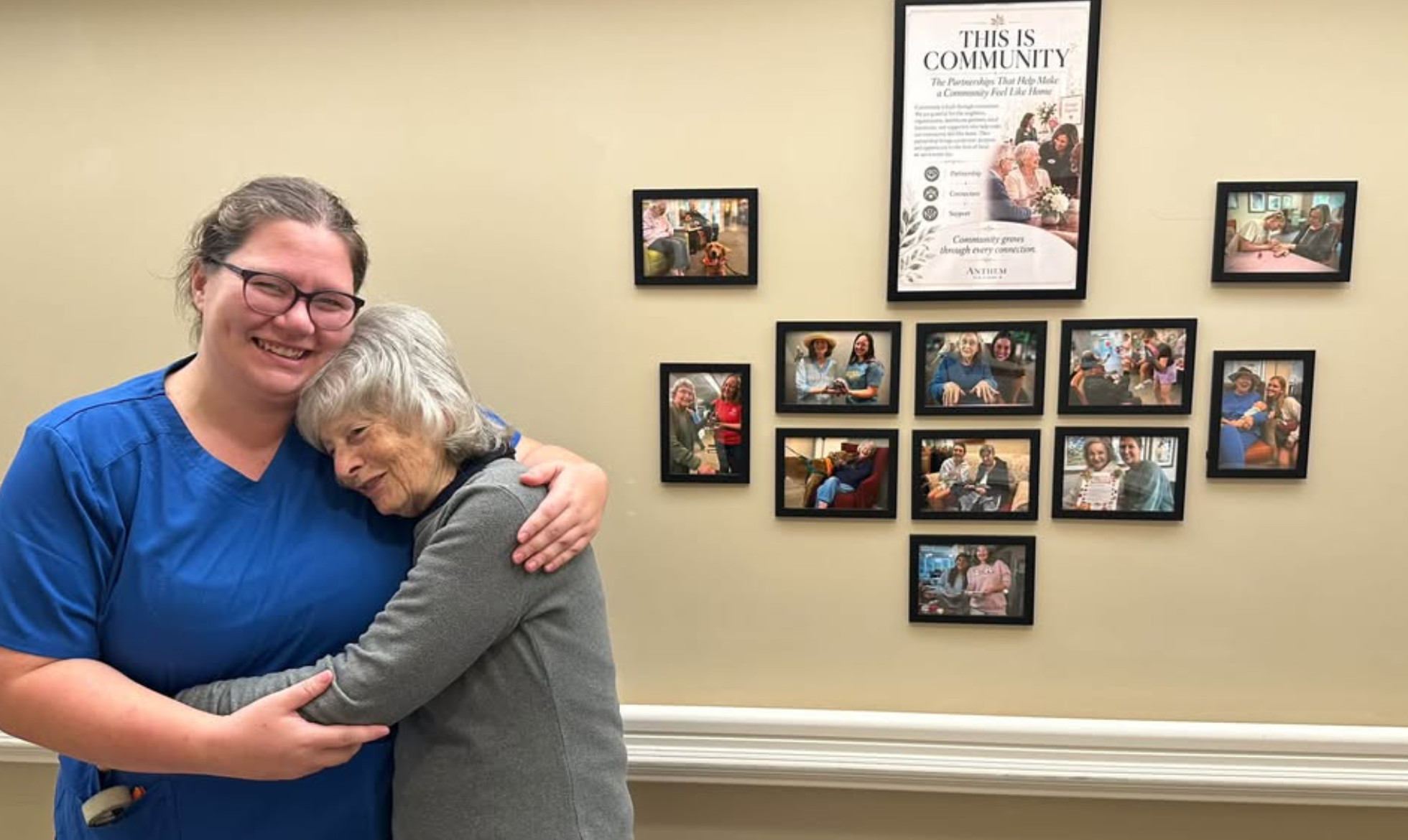
(Our header image shows a resident and caregiver at Concord Place Memory Care in Knoxville, Tennessee.)