
Are you as glad as we are that we’ve turned the corner and spring seems to have finally arrived? After a cold, harsh winter, residents and staff at our Anthem communities are thrilled to dig into spring projects and activities. Warmer weather focuses us planting, field trips and crafting outdoor decorations as we happily mark the seasonal changes.
For individuals with dementia, being able to get outdoors and enjoy sunshine and fresh air brings a special kind of therapy. That’s why we make every effort to get residents and staff outside to stimulate their senses as they experience the natural fragrance of our flowers and greenery and partake in walks and morning coffee with friends and family in the courtyard.
Sharing a few of many wonderful images of our residents and staff enjoying some (past and present) outdoor events and activities:

This Chisholm Place resident displays her artistic (and organic) bird feeder in Wichita, Kansas.

Highline Place residents and staff take a field trip to Roxborough State Park in Littleton, Colorado.

Porter Place hosts their annual Easter Egg Hunt for local families and friends in Tinley Park, Illinois.
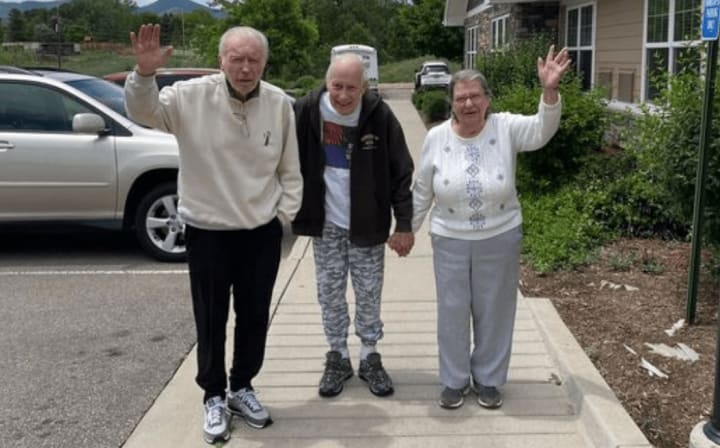
Residents of Willowbrook Place in Littleton, Colorado can’t wait to get their walking club back in action again.

And planting is in full bloom at Chelsea Place in Aurora, Colorado.
For those of you who are caring for a loved one with dementia it’s time to open a few windows and put on your walking shoes. Even a slow walk in the backyard garden will raise the spirits and improve oxygen to the brain.
Try scheduling a visit to the local park. Or set up a table in the backyard and bring some flowerpots, soil and flowers to plant. You’ll be surprised at how therapeutic the fresh air and working the soil is … for both of you!
Finally, check in with the Anthem Memory Care community near you. We are always holding concerts and other events and we'd love to have you join us.
(Our header image shows a happy wave from a Harvester Place resident celebrating good weather in Burr Ridge, Illinois)
Grace Point Place residents and local school kids from Southwest Chicago Christian School recently got together to create some adorable Easter baskets. The baskets were gifted to staff to give to their children. Great activity, great fun and a great gift! The project was covered in the local Oak Lawn Patch. You can read the article here.
April is Parkinson’s Awareness Month, an opportunity for all of us to gain a greater understanding of the disease that impacts over 200,000 Americans each year.
Many are familiar with Parkinson’s disease through the experiences of public figures like actor and writer, Michael J. Fox, who has courageously shared his journey with the disease and become an advocate for Parkinson’s awareness and research.
But what is this neuro-degenerative disease? Can it lead to dementia?
The Parkinson’s Foundation defines Parkinson’s as “a neurodegenerative disorder that affects predominantly the dopamine-producing neurons in a specific area of the brain called the substantia nigra.” In layman’s terms, this is a disease that attacks the neurons that control motor activity, which causes uncontrollable movements, including shaking, stiffness, and coordination issues.
Here are some important things to know about Parkinson’s disease:
What exactly is the relationship between Parkinson’s and dementia?
As a care provider focused 100% on dementia care, we are very familiar with the challenges a diagnosis of Parkinson’s disease brings to families. If you are in this situation, know that there are resources and support networks available to help you better understand the disease and cope with the journey ahead.
Here are a few we have found to be especially helpful:
https://www.parkinson.org/resources-support
https://www.caregiver.org/resource/parkinsons-disease-caregiving
As we acknowledge Parkinson’s Awareness Month, it benefits all of us to learn more about the disease as well as other neurological diseases and disorders that have the potential to impact our lives and the lives of those we love and care for.
For so many families, planning for an aging parent’s inability to care for themselves is low on the list until an urgent need arises, such as a diagnosis of dementia. It’s understandable. Life gets in the way. There are children to raise, work issues, and all the challenges of daily living to tackle. And, yet, with no preparation, many families will end up in legal tangles which take time, effort (and money) to straighten out.
We hear often from family members who find themselves overwhelmed with the need to collect documents, organize health records and, even more challenging, get mom or dad to sign papers to enable them to do all of it.
If that sounds like your situation, first know that you are not alone. The best way forward is to take a deep breath and get organized.
Here are five initial steps to take:
Now for the documents. Here are the key documents you will need (not all may be applicable):
There will most certainly be more documents needed as you go through the process of taking charge of care for your loved one. But taking the above steps and securing key documents up front will make it easier to tackle the legal landscape as you and your family begin to navigate the challenging journey ahead.
For most of us, some of life’s most enjoyable moments occur outside our doors. Whether it’s going for a walk, shopping, going out to lunch, or just taking a drive, getting out and about keeps us from feeling isolated and connects us to each other and the world around us.
This is especially important for individuals with dementia. Studies have shown that social isolation can be particularly detrimental to their physical, cognitive, and emotional health. Ultimately, it can lead to a more rapid decline in the quality of life.
That is why the Alzheimer’s Association recommends regular social interaction for individuals with Alzheimer’s to improve overall health and maintain a sense of involvement in the community. This includes getting out of their homes regularly to enjoy a change of scenery and connect with the greater community.
At our Anthem Memory Care communities, we love gathering our residents, staff (and even family members) together on a regular basis to take advantage of all that our greater communities have to offer.
Here are some photos from a few of these visits:

Chelsea Place residents enjoy a visit to a local stable in Aurora, Colorado.
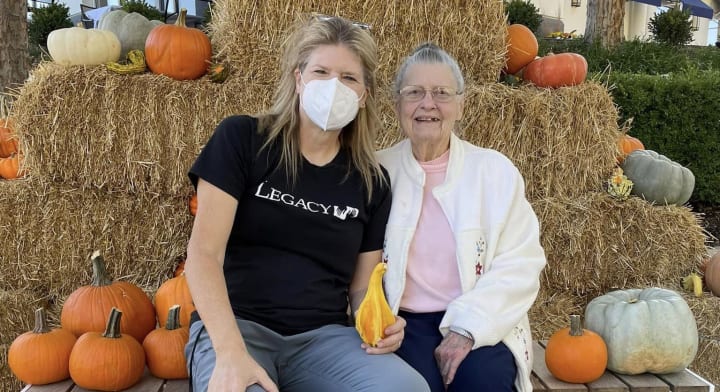
Residents of Chisholm Place in Wichita, Kansas always enjoy their fall trip to the pumpkin patch.
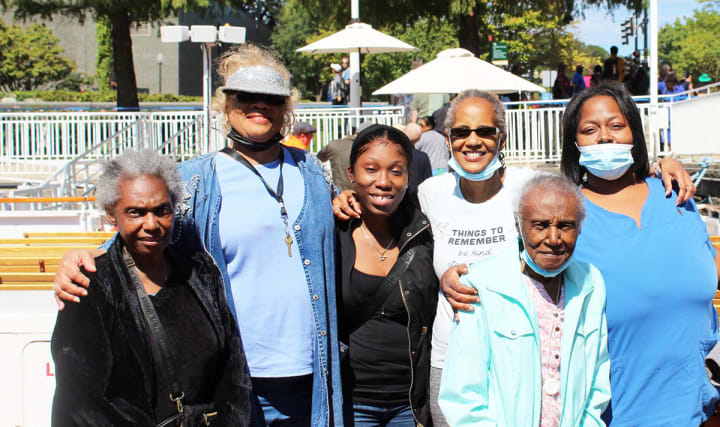
Outings to Lake Michigan get a big thumbs up for residents of Grace Point Place in Oak Lawn, Illinois.
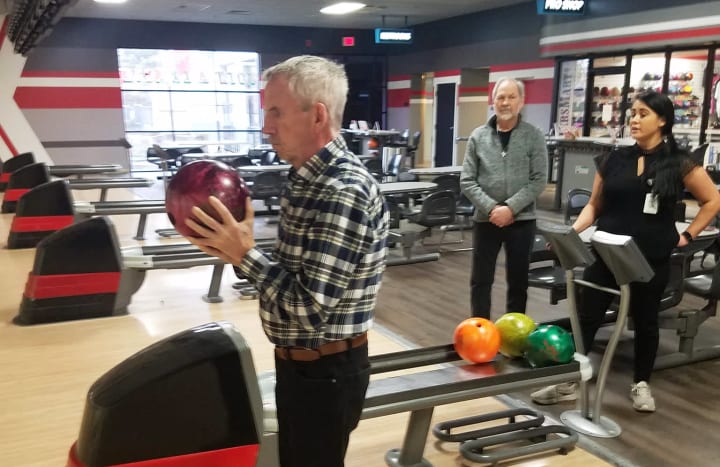
A resident of Harvester Place in Burr Ridge, Illinois show off his skills at the local bowling alley.
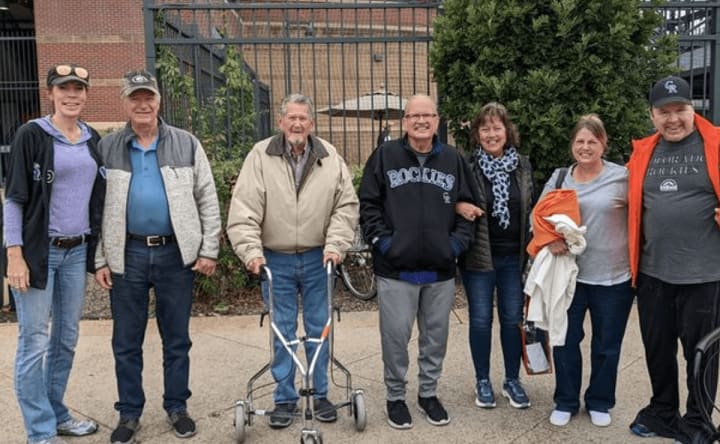
One of Highline Place residents’ favorite field trips is taking in a Rockies game!
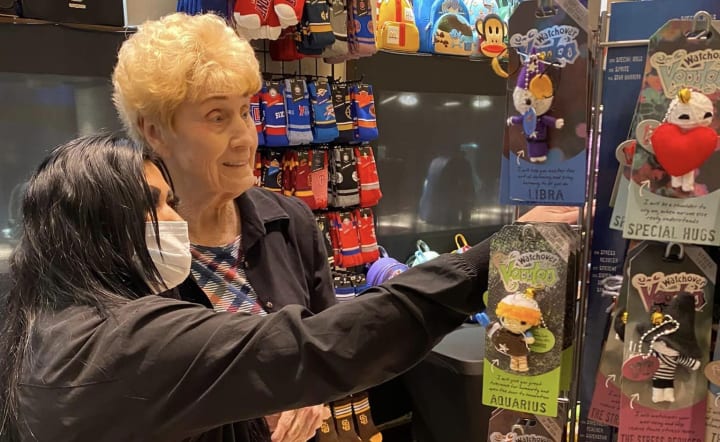
Visiting the local mall is a popular outing for residents of Vineyard Place in Murrieta, California.
Family caregivers of loved ones with dementia can greatly improve their quality of life by adding in some regular outings to their schedule. It can be a simple as a weekly drive through the neighborhood, or an early lunch at a local restaurant. Even a short walk down the street and back can do wonders, both physically and emotionally.
If you are located near one of our Anthem communities, we encourage you to bring your loved one to one of our many events. Contact us for details. We'd love to have you join us!
(Our header image shows residents of Cascade Creek Memory Care in Rochester, Minnesota on the bus headed for one of many outings!)
The Mayer School of Irish Dance brought a bit of Ireland into the Harvester Place Memory Care community, just in time for St. Patrick's Day. The talented dance troupe includes dancers from age 6 to 18 bringing an authentic Irish dance experience to the delight of residents and staff.
For one of the residents, Graham Murphy, the Irish tunes brought back a whole host of memories growing up in an Irish household and enjoying the traditional music of his home country. All the residents enjoyed the colorful costumes and watching the dancers whirl to a traditional jig.
The event was covered in the local Patch. You can read the full story here.
Brain Awareness Week is a great opportunity to learn more about brain health. This is especially important for those who are caring for a loved one with dementia. The more aware you are, the better care you can provide.
First, a few brain facts you’ll find interesting:
There is a wealth of information about brain function available from The Alzheimer’s Association. They have even put together a “brain tour” which explains how the brain works and how it is impacted by Alzheimer’s disease. You can take the tour here.
Research has shown that engaging in brain stimulating activities, along with exercise and a diet of brain healthy foods can help individuals with dementia retain cognition levels longer. In fact, it’s good for everyone!
Here are some helpful links to learn more:
Mayo Clinic 6 Tips to Keep Your Brain Healthy
12 Foods to Boost Brain Function
Awareness is the first step towards keeping our brains as healthy as possible and leading a healthier, happier life. Make it a point to keep up to date by taking advantage of the resources available to you. And feel free to reach out to any of our Anthem communities for more information. We’re always happy to help!
March is Women’s History month! Since we are 100% dedicated to memory care, we wanted to take a moment to focus on a few of the many amazing women who have made significant contributions in neurology. Without their hard work, our understanding of the brain would be nowhere near where it is today.
An increased understanding of our brains brings with it deeper insights as to those diseases and anomalies that impair its function, all of which are key in the fight to end Alzheimer’s disease. The Alzheimer’s Association, as well as ImproveMemory.com have spotlighted several outstanding women researchers in neurology, both past and present.
Below are five of these women, whose work has been instrumental in fostering a deeper understanding of the brain and helping drive innovation.
Cecile Vogt-Mugnier – Along with her husband, Oskar, she was the first scientist to clearly identify the structures of the brain. Together they created the first map of the cortex and thalamus portions of the brain. And their anatomical models are still used today.
Marian Cleeves Diamond – One of the founders of modern neuroscience, she is perhaps most noted for her study of the brain of Albert Einstein at the University of California, Berkeley. That research led to her findings that early experience and environmental enrichment can have a physical impact on the brain.
Anita Harding – One of the first scientists to study genetics and the brain, her focus was on creating diagnostic criteria to identify brain disorders that are genetic in origin. Her work at the Institute of Neurology, University of London has paved the way for additional groundbreaking research.
Patricia Goldman-Rakic – A professor of neurology at Yale University, her studies have been instrumental in identifying diseases and disorders associated with damage to the brain’s neural circuits. These disorders include Parkinson’s, attention deficit disorder (ADD) and Alzheimer’s.
Suzanne Corkin – World renowned for her research on the hippocampus region of the brain, she made the discovery that the hippocampus is where long term memories are stored. Her work at the Massachusetts Institute of Technology (MIT) also included insights into the impact on the brain of head injuries and diseases such as Parkinson’s and Alzheimer’s.
These are just a few of the women who, through their talents, dedication, and perseverance, are paving the way for today’s scientists to continue groundbreaking neurological research. Our hope is that these discoveries will lead to additional treatments and breakthroughs that will not only improve brain health but put an end to Alzheimer’s and other deadly diseases.
(The header image is of Dr. Marian Cleeves-Diamond, showing a model of a human brain to a child. Image credit: Wikipedia Creative Commons, Attribution-Share Alike 4.0 International.)
Related Articles:
When we think of Alzheimer’s disease the focus tends to be on memory loss. And certainly that is a big part of the disease. What is less often discussed, however, are the behavior changes that can occur as the disease progresses.
For family caregivers these changes can be extremely disturbing as they witness the person who raised them develop new and strange personality changes, often in direct contrast to the once loving, caring individuals they were in earlier times.
Why does this happen?
Since Alzheimer’s disease impacts several areas of the frontal portion of the brain, behavior patterns associated with those areas become impaired. In addition to memory, the frontal lobe also controls our impulses as well as the ability to focus and maintain control. When disrupted, this can lead to aberrant behavior.
The Alzheimer’s Association has developed a list of behavioral changes associated with Alzheimer’s disease. They may include the following:
Here are some tips that we have found helpful to family caregivers to better cope with these changes:
While memory impairment is certainly the hallmark of Alzheimer’s disease, behavioral changes such as inappropriate behavior, mood swings and aggression can all be part of the disease. Learning to deal with them can be frustrating. However, by gaining a better understanding of this aspect of the disease you will be able to identify possible triggers, along with gaining a better sense of control over the situation. This, along with caring for your own mental health will help you continue to interact in positive ways with your loved one and help carry you through the challenging days.
Whether you are young or old, Valentine’s Day is a great time to celebrate the love in your life. And it doesn’t have to be limited to a romantic partner. Nowadays, millions of people all over the country take advantage of the day to acknowledge all the people in their lives they care deeply about.
At our Anthem Memory Care communities Valentine’s Day is yet another opportunity to get family members, residents and staff together and share the love through a variety of activities and events.
Love, in fact, is a big part of everything we do. And it’s why it is part of our mission: to “Protect, Engage and Love” our residents.
Valentine’s Day may be over, but our residents, families and staff feel the love all year long!
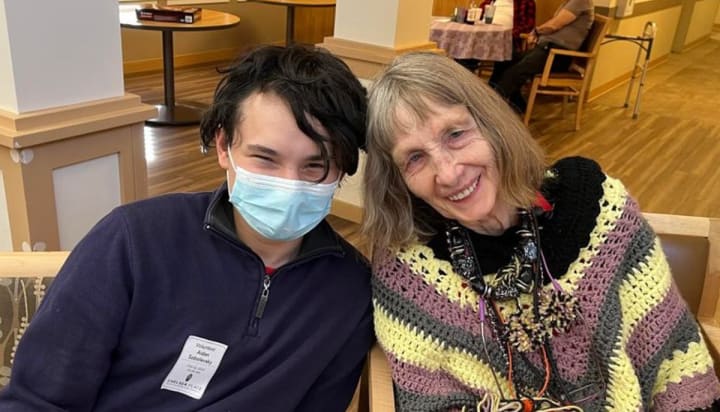
Many of the visiting students from local Regis Jesuit High School have formed special bonds with Chelsea Place Memory Care residents in Aurora, Colorado. And vice versa!
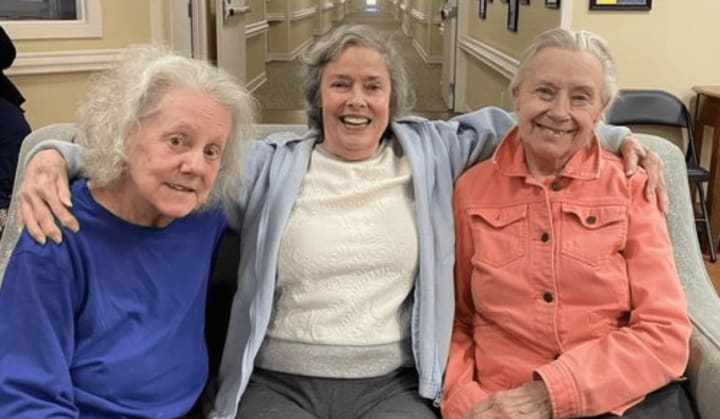
Family visits are often and always bring smiles and laughter. This loving photo was taken at Morningside Place Memory Care in Overland Park, Kansas.
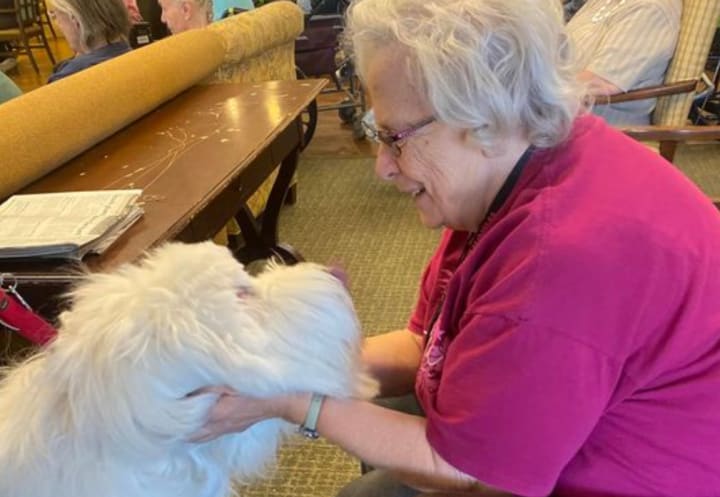
The ear scratch says it all for this dog-loving resident of Willowbrook Place Memory Care in Littleton, Colorado.
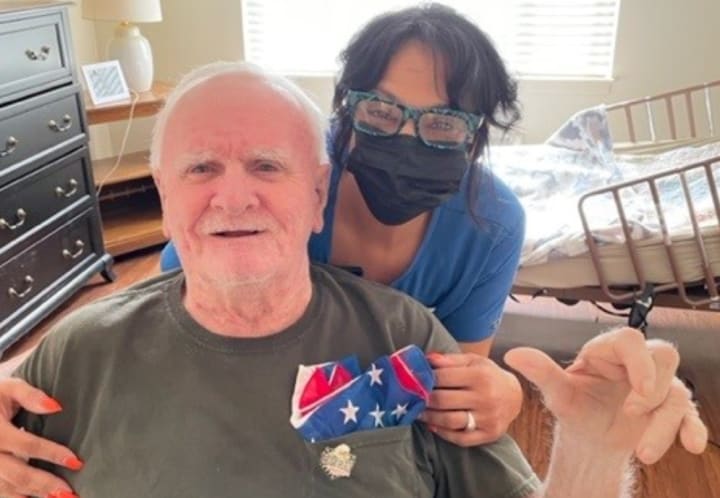
Paying love and respect to the veterans at Harvester Place Memory Care in Burr Ridge, Illinois.
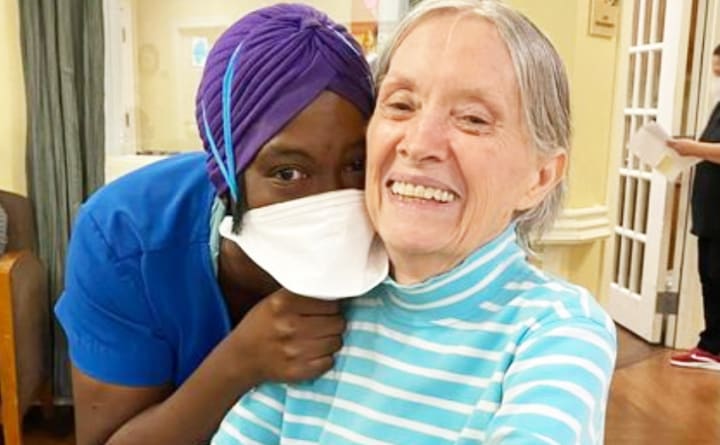
We have the most loving, compassionate caregivers at our communities. The smile on this resident’s face says it all in this spontaneous photo taken at Chisholm Place Memory Care in Wichita, Kansas
Do you have a loved one with dementia in your family? How can you find ways to share your love throughout the year? Perhaps through making more of an effort to visit them. Or phone them more often. Start sending letters with some recent photos of family members. Or have the children in your family send cards with loving thoughts.
As always, we welcome you to contact one of our Anthem Memory Care communities near you and ask about our mission to “Protect, Engage and Love” our residents. We’ll be happy to share our stories with you!
(Our header image of a festive toast with sparkling cider was taken during a recent Valentine’s Day luncheon at Vineyard Place Memory Care in Murrieta, California.)
Related Articles:
Harvester Place Memory Care has received the prestigious Pinnacle Customer Experience Award, satisfying the rigorous demands of scoring in the top 15% of the national across a 12-month period.
“Our teams are dedicated to providing the highest level of quality care, comfort and support to our residents,” said Shannon Gutierrez, national vice president of operations for Anthem Memory Care. “We are pleased to be recognized for all of our efforts.”
Argentum covered the awards and recipients. You can read the full article here.
Porter Place Memory Care has received the prestigious Pinnacle Customer Experience Award, satisfying the rigorous demands of scoring in the top 15% of the national across a 12-month period.
“Our teams are dedicated to providing the highest level of quality care, comfort and support to our residents,” said Shannon Gutierrez, national vice president of operations for Anthem Memory Care. “We are pleased to be recognized for all of our efforts.”
Argentum covered the awards and recipients. You can read the full article here.
As a memory care provider, we understand the challenging family dynamics surrounding a diagnosis of dementia. While each situation is unique, a common concern raised is when family members aren’t all on board with the diagnosis. In many cases they are struggling to accept that the relationship they’ve had with mom or dad will be changing dramatically and they are fearful of the road ahead.
The Alzheimer’s Association has put together an excellent list of tips to help families like yours resolve some of the family conflicts arising after a loved one’s diagnosis of Alzheimer’s disease. We’ve summarized them below:
At some point in your journey you may also want to consider transitioning mom or dad into a memory care community, one built expressly to support individuals living with dementia. We welcome you to contact one of our communities near you and share your concerns and needs with us. We will be happy to answer your questions and help you better understand the memory care environment, services and options available to you.
“There is increasing evidence connecting cardiovascular risk factors with brain health,”
-- Dr. Seth Martin, cardiologist at Johns Hopkins
And yet many family caregivers of loved ones with dementia are not aware of this connection.
Understanding the relationship between heart and brain health is especially important in keeping individuals with dementia as healthy and mentally sharp as possible.
What better time than American Heart Month to learn more about heart health and how it can impact our brains.
The CDC (Centers for Disease Control) notes serious health issues impacting the brain that emanate from heart disease:
The Mayo Clinic defines vascular dementia as “a general term describing problems with reasoning, planning, judgment, memory and other thought processes caused by brain damage from impaired blood flow to the brain.”
How can family caregivers optimize the heart-brain connection to keep their loved ones healthy? Here are a three tips from the Alzheimer’s Association:
Finally, for those with a sweet tooth, try replacing that donut with a square of dark chocolate. Researchers have found that one square per day is a delicious way to help lower blood pressure. But just one square!
As far as we’re concerned at our Anthem Memory Care communities, every month is heart month (and brain month). It gives all of us an opportunity to evaluate our daily routines and find ways to adjust our lifestyles to keep our hearts, and our brains healthier!
We always encourage families to begin evaluating care options soon after a loved one has been diagnosed with a dementia, such as Alzheimer’s disease.
The reason for this is because it is hard to predict how quickly the disease will progress. And a decision made hastily is not always the best one.
Finding the best fit for your loved one is something that requires some time and effort to get right. There are many questions to be asked and boxes to be checked.
Here are 5 key questions that should be on top of your list:
Question #1: Are they dedicated to providing memory care?
Why this is important: New therapies and innovations to treat individuals with dementia are always being discovered. Communities dedicated to memory care are comprised of individuals who are expert in dementia and highly trained in all areas of memory care. Their focus is 100% on memory care without the distraction of covering other types of care.
Question #2: What safety measures are in place?
Why this is important: Regular check-ins, clinicians on staff 24/7, using advanced safety technologies and sensors and buildings engineered specifically to enable freedom of movement with safety measures built in; all are essential to maintain safety, especially as your loved one’s dementia progresses.
Question #3: What activities do they provide?
Why this is important: Engaging in purposeful activities is essential to stimulate the brain for individuals with dementia. Gardening, visits with school children, outings to local museums, parks and other meaningful activities should be on the agenda. Yoga and exercise classes should also be included. Speak with the engagement team and ask them to share an activities schedule.
Question #4: Do they encourage drop in visits from family?
Why this is important: There should be nothing to hide. Drop in unannounced. Ask to take an impromptu tour. The staff should be welcoming and proud to show off the community.
Question #5: Do doctors and dentists visit regularly?
Why this is important: While your loved one will have their own physician, there may be occasions when transporting them to the doctor may be uncomfortable or inconvenient. Knowing there is a doctor and dentist on call is important.
Also be sure to check out the dining area and the menus. Ask to talk with the chef and sample some of the food. It should be delicious as well as nutritious. And be sure to check the qualifications of all the individuals who are caring for your loved one. Do they have the proper credentials? How are they trained?
If you aren’t satisfied with the provider’s answer to any of these questions press for more information. Trust your instincts. If something doesn’t seem quite right, it probably isn’t.
The decision to transition a loved one into memory care is never an easy one. However, taking the time to get it right will make a big difference, not only in the quality of your loved one’s care but in your peace of mind as well.