
Harvester Place Memory Care resident, David Graham, reunited with his band, the Country Gentlemen, in Burr Ridge, Illinois to play some tunes for fellow residents and families.
What a great opportunity to share his passion for music! You can read the full story in this Argentum article: https://www.argentum.org/the-beat-goes-on-memory-care-resident-shares-music-passion-with-family-and-friends/
When an individual is diagnosed with dementia, such as Alzheimer’s disease, the journey ahead will involve much more than dealing with memory loss. There are both mental and physical changes that will occur. This is when it is so important to have access to medical professionals who are trained in dementia care.
Many of these professionals are nurses. These are special individuals who have combined their medical knowledge with their passion to serve and channeled it into lifelong careers. For many of our Anthem Memory Care community nurses it is a personal calling, having experienced dementia within their own families. They are giving back by dedicating their time and expertise to serving our wonderful residents.
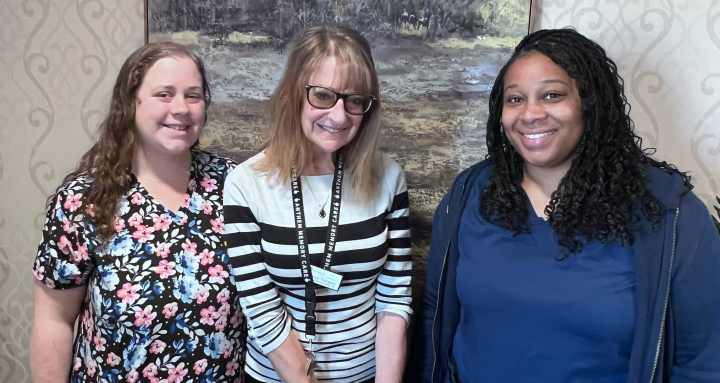
Pictured above are (from left) Jaimie Slavik, RN, Wendy Thompson, RN, and Kirnesha Davis, LPN from Elk Ridge Memory Care in Maplewood, Minnesota.

Pictured above are (from left) Monica, clinical services director and head nurse, Patrick, and Sharon from Clear Creek Memory Care in Fayetteville, Arkansas.
To ensure the highest quality care, Anthem Memory Care provides specialized dementia care training for all our nurses. Being certified as a dementia care practitioner means they understand all aspects of the many different forms of dementia. Our training is ongoing to ensure that they continue to provide optimum care. Our nurses are also trained to be excellent communicators with the ability to empathize with residents and their families and work with them to help residents live their best lives.
Here are just some of the valuable services our nurses provide every day to our residents:
It is impossible to overstate the key role our dementia care nursing staff plays in optimizing the health and wellbeing of those who live inside our communities. Our nurses and caregiving staff are at the heart of our mission to “protect, engage and love” our residents. And we love them!
We invite you to visit any of our Anthem Memory Care communities and meet our nurses. They will be happy to answer your questions and you will find them eager to learn more about your family’s journey.
(Our header image shows the nursing team from Morningside Place Memory Care in Overland Park, Kansas. Shown (left to right) are: Michelle Soule, Keith Melick and Neosha Collier. Missing from the photo is Patrick Lacmago Fombasso.)
Related Articles:
For some residents, it may be a lifelong love of gardening or a passion for animals. And for others, it is the excitement of going to a baseball game and enjoying a bag of peanuts and a cool drink while they cheer on their favorite team.
And yet, for family members of loved ones diagnosed with dementia it can be challenging to find ways to keep them involved in things they’ve always loved to do. In some cases, it is the concern over health issues, in others it’s simply figuring out how and where to start.
Your loved one’s lifelong passions don’t necessarily have to become faded memories.
We know this because we have witnessed the transformations of residents when they are able to experience, even in small doses, some of the activities and things that brought them so much pleasure years ago.
At our Anthem Memory Care communities our team members spend each day listening to residents and their families and learning about their passions in life. From those insights, they work together with residents and families to design outings and activities to keep residents connected to the things they most enjoy.
Here are just a few of the special moments we’ve had the privilege of sharing with them.
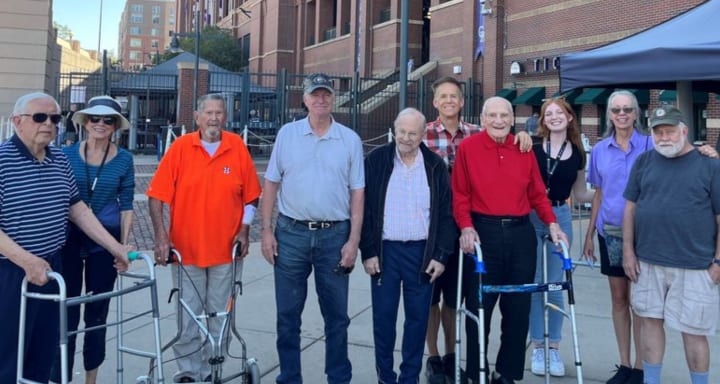
Lifelong baseball fans from Highline Place Memory Care in Littleton, Colorado, take in a Rockies game.
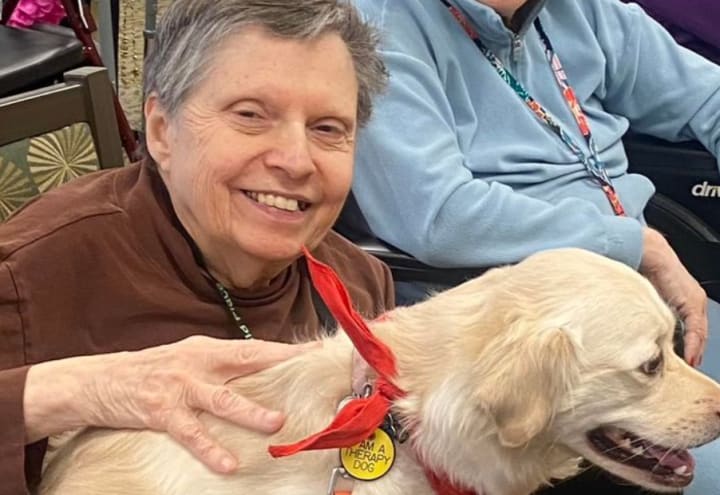
You can see the joy on the face of this dog loving resident of Emerald Place Memory Care in Glenview, Illinois.
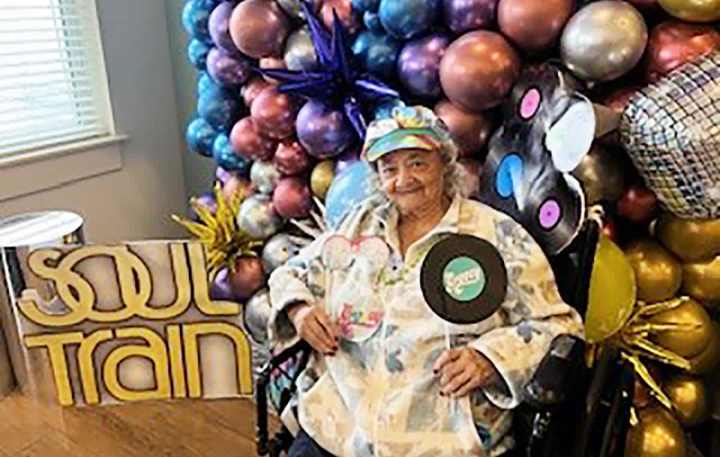
A lifelong lover of “Soul Train” gets a special birthday celebration at Grace Point Place Memory Care in Oak Lawn, Illinois.

A retired police officer and resident of Porter Place Memory Care in Tinley Park, Illinois, visits the local police department to share memories and experiences.
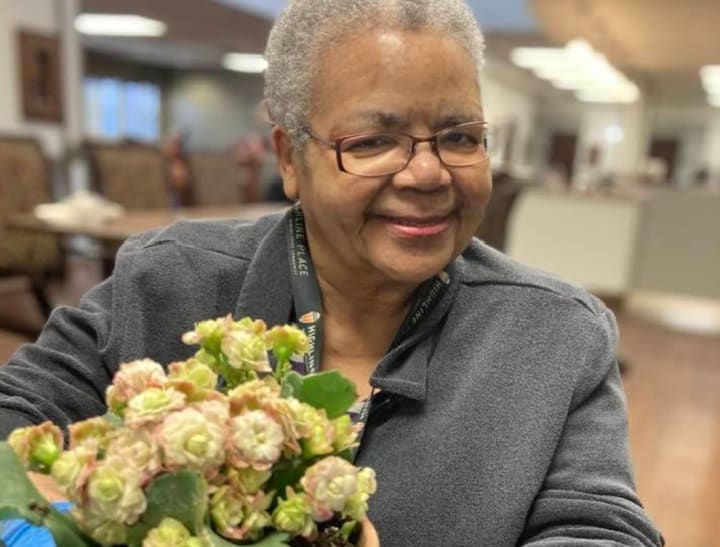
The weather kept her indoors, but not away from planting her flowers for this resident of Highline Place Memory Care in Littleton, Colorado.
If you are caring for a loved one with dementia, consider sitting down with family members and working out a plan to re-engage them with that special activity or event that they used to love. Yes, it will require organizing and compensating for any health and mobility issues. However, by taking some time up front to plan ahead and get help from family members or trusted friends, you experience firsthand the joy it brings to both of you.
(The header image is one of our favorites! It shows Ray Ruggles, a former shortstop for the Kansas City Cardinals Farm team being filmed by the local KSN News channel as he shows off his jersey. Ray, along with his son and residents of Chisholm Place Memory Care enjoyed watching a Wichita Softball league game. What a fun day that was!)
Related Articles:
We all know that engaging in moderate daily exercise is important to healthy aging. It makes us feel better, look better, and function more efficiently. And yet many don’t realize the clear benefits that exercise brings to our brains and cognition.
Exercise is even more important for individuals with dementia.
Studies cited in the National Library of Medicine note an abundance of evidence showing that physical exercise is “a strong gene modulator that induces structural and functional changes in the brain, determining enormous benefit on both cognitive functioning and wellbeing.”
That means that for individuals living with dementia, such as Alzheimer’s disease, exercise takes on an even more important role. A program of regular exercise increases oxygen to the brain, which can slow neurodegeneration and help them retain higher levels of cognition longer.
Here are some additional benefits of regular exercise:
Family caregivers often ask our Anthem communities how they can encourage their loved ones with dementia to exercise more often to gain some of these benefits.
We have summarized eight tips from the National Institute on Aging that family caregivers can use to get their loved ones moving:
If your loved one has mobility issues, there are plenty of resources to help you create an exercise plan that accommodates their ability level. It is always important to consult your loved one’s physician before embarking on any exercise regimen. They can help you design a program that meets your loved one’s needs and considers all aspects of their health.
Regardless of our age and abilities, our bodies were designed to move. Moderate daily exercise that matches ability levels benefits everyone!
Navigating financial matters can be a sensitive topic for anyone, regardless of age. For individuals diagnosed with dementia, like Alzheimer’s disease, this can be especially complex. As the disease progresses and behavior shifts, managing finances can become increasingly challenging. Many individuals with dementia may resist or become reluctant to share or relinquish control over their financial affairs. This presents unique challenges for caregivers and family members seeking to ensure their loved one’s financial well-being while respecting their autonomy.
And yet financial control is important for trusted family members to have, especially as the disease progresses. Instead of engaging in a constant tug of war, there are approaches you can take which can minimize disruption and anxiety while you take the burden off the back of your loved one.
First, get everyone on board, including your loved one with dementia.
Sitting down and discussing financial issues with other family members should be done in advance of approaching your loved one with dementia. You will want to identify the family member who is in the best position to discuss financial matters, hopefully one who gets along well and can explain things in a positive way.
Here are the key areas you will need to address before gaining control:
If your loved one has a financial advisor and you have a POA in place, now is the time to get in touch with them. They can be an excellent source of information. They will be able to help you and your loved one understand their investments, assets, bank accounts, and their overall financial situation.
Now you are ready to move on to the basics of getting more control over finances.
The National Institute on Aging has published some useful tips to help family members gain the needed control over finances for a loved one diagnosed with dementia while respecting their independence.
We’ve summarized them below:
There are several on-line resources available to help. The Alzheimer’s Association has published a list of legal documents, including POAs, which you can access here.
Many of us at Anthem Memory Care have experienced firsthand the experience of transitioning into the role of caregiver for a parent or other loved one. We know how complex the surrounding issues are, especially as they relate to gaining financial control. Feel free to contact any of our communities for information, additional resources, or just a sympathetic ear.
We’re here to help!
Monday's eclipse brought local students from Highlands Ranch STEM School together with residents of Highline Place Memory Care. Everyone enjoyed donning the special glasses and watching the moon crest over the sun.
The fun sun watching event was covered by local Fox News Channel 31 in Denver.
You can watch the video here.
Thanks to increased awareness and the hard work of organizations like the Alzheimer’s Association, Americans are more attuned to the need to better understand dementia and to educate themselves, their families, and others as we work together to fight to find a cure for Alzheimer’s and other dementias.
That said, myths and incorrect information continues to proliferate the internet and other media streams which can make it challenging to get accurate answers to the many questions that come to mind when faced with a family member or friend who has been diagnosed with Alzheimer’s.
Below is a list of some of the most common questions asked about dementia with answers to help augment your own research efforts. We have compiled them from several sources, including The Alzheimer’s Association, The National Institute on Aging, and Yale Medicine, as well as our own Anthem Memory Care professionals.
No. There are many forms of dementia. Alzheimer’s disease is, however, the most common, accounting for 60-80% of all diagnoses. To help families and caregivers understand the different types of dementia, Dr. Tam Cummings, gerontologist and dementia expert, has an excellent presentation which you can access here.
One of the most common risk factors is age. After age 65 an individual’s risk for Alzheimer’s disease doubles every five years. Women are also more likely to get Alzheimer’s disease than men, although the reason for his is not yet clear. Other potential factors include experiencing a severe head injury or chronic heart issues which may restrict blood flow to the brain.
This will change depending on the type of dementia that a person has but the most frequently you will notice issues with memory, especially short-term recall. You may also notice lapses in judgement and temperament and other behavior changes. Because these symptoms are often attributed to “getting older” they may be ignored which is why Stage One of Alzheimer’s disease often goes undiagnosed.
Not necessarily. Dementia is not known to be commonly linked through genetics except in the case of “familial Alzheimer’s”, where there is a genetic link. This, however, only accounts for about 5% of all diagnoses.
Diagnosis of dementia and the specific type of dementia that a person has requires a battery of tests and observations. Only a doctor or other qualified healthcare professional can make a definitive diagnosis. It is important to note that Medicare will cover testing and there are many benefits to being tested early.
This depends, in most cases, on the type of dementia. For instance, Alzheimer’s disease begins when amyloid proteins form in the brain. These deposits begin to create what is referred to as tau tangles. These tangles inhibit the brain synapses from connecting and transmitting vital information that connects an individual to memory or, in later stages, to motor and other bodily functions. More details on how the brain works are available from The Alzheimer’s Association.
Unfortunately, yes it is. But we have great hope for tomorrow. Research continues to drive innovation and there is much reason to hope that the day will come when dementia can be controlled and even reversed. You can read more about dementia research on The Alzheimer’s Association website.
While there is no definitive way to avoid developing dementia, there are things you can do to keep your brain stimulated and your body as healthy as possible for as long as possible. A healthy diet, exercise, and regular social engagement are all known to boost wellbeing and maintain stronger cognitive levels.
Have more questions?
Of course you do. And, fortunately, there is an abundance of resources available to dig deeper and to answer additional questions you have and help guide you on your information journey.
Start by visiting our “Resources” page for links to educational webinars and educational articles.
And feel free to reach out to any of our Anthem Memory Care communities for additional information and resources. We’re here to help!
Liberty Place Memory Care residents are making Easter brighter for local children of Reach Out Lakota. They worked together to create big baskets filled with toys, candy, games and other goodies.
“Our seniors felt a great sense of purpose and joy while filling these baskets for those in need,” said Amy Snow, life engagement director told the local Warren County Post.
You can read the full story at the Warren County Post.
Three residents of Vineyard Place Memory Care in Murrieta, California and their spouses recently renewed their vows in a beautiful group ceremony. Families and friends were invited to witness the special celebration.
The event was covered in the local Patch which you can read here.
Porter Place residents and staff celebrated the anniversary of the founding of the Girl Scouts with Scout Troop #75826. The scouts, in first through eighth grades, joined residents for an afternoon of crafting and building friendships.
The event was covered by the local Tinley Park Progress. You can read more about it on their Facebook page.
Navigating conversations with individuals living with dementia can be challenging as family members struggle to know what to say and what not to say. It can, however, be an enriching experience with the right approach. Effective communication is vital for fostering meaningful connections and understanding their unique needs and preferences.
Empowering yourself with knowledge about the changes your loved one is going through enables you to adapt your communication style effectively, fostering a deeper connection that positively impacts both of your lives.
The Alzheimer’s Association has put together a comprehensive list of communications challenges that are organized to fit each stage of Alzheimer’s disease. It includes tips for family and friends to communicate more effectively during each stage. We have summarized some of the key insights and tips below.
Communicating in early stages:
During this stage, an individual can still communicate and engage in meaningful conversations. You may notice however that they repeat themselves more frequently or begin to appear overwhelmed by too many voices talking at once. Here are some tips:
Communicating in middle stages:
This is typically the longest stage of Alzheimer’s which can last for many years. During this time, there may be noticeable behavioral changes, and the individual may encounter challenges in expressing themselves and forming meaningful sentences. Here are some helpful tips:
Communicating in later stages:
The late stage of Alzheimer’s can last from weeks to years. As the disease progresses the individual may rely more and more on nonverbal communication. Facial expressions and vocal sounds become important ways of communicating. Here are tips:
Make sure to pass along these helpful tips to your family and close friends. They'll value the insights and can engage in more meaningful conversations with your loved one as a result. This will not only strengthen their connection but also inspire them to remain actively involved in your loved one's life.
We have all experienced the negative impact of lack of sleep. We are less alert, more irritable, and find it hard to get through the day. There is a good reason for this. As the National Institutes for Health notes, sleep is known to improve memory recall, regulate metabolism, and reduce mental fatigue. That is why a recommendation of a minimum of seven hours of sleep per day is optimal to retain healthy cognitive and behavioral function.
A good night’s sleep is even more important for individuals with dementia.
According to studies, individuals with dementia, such as Alzheimer’s disease, tend to experience more sleep issues than healthy individuals. While the reasons for this are not fully understood, sleep deprivation can result from the impact of Alzheimer’s on the brain.
One way to tackle sleep issues for a loved one with dementia is through medications. However, the Alzheimer’s Association has published a list non-drug strategies that should be tried first. We have summarized them below:
Can a good night’s sleep help reduce the risk of developing dementia?
Yes! Studies have shown that for healthy individuals, getting a good night’s sleep can help reduce the risk of getting dementia. Furthermore, Harvard Medical School has cited studies from Toronto and Chicago researchers on individuals at a genetic risk for Alzheimer’s disease have shown that those who are able to achieve quality sleep reduced the likelihood of developing Alzheimer’s.
A good night’s sleep is powerful medicine. It has the ability to replenish and revitalize all areas of our bodies and brains. It’s time for family caregivers to take it seriously and make quality sleep a priority for your loved ones and yourself.
When was the last time you visited a museum? Perhaps a better question is when was the last time you took a loved one with dementia to a museum?
Did you know that museums have an ability to trigger memories? Whether it is a visit to an art museum, a vintage car museum or a wildlife refuge, the experience of walking through a museum can connect individuals with dementia to their past as well as to elements that interest them, move them, and stimulate their intellect.
An increasing number of studies show that providing an individual with dementia with opportunities to observe and interact with historical artifacts and other exhibits can provide cognitive stimulation, improve social engagement, and promote a stronger sense of well-being.
In short, a visit to a local museum or other center that provides educational value can be therapeutic to individuals who may feel increasingly cut out of the cultural experience provided in those environments.
Recognizing these benefits, an increasing number of museums are adding special exhibits and programs to encourage participation by individuals with dementia. The impact has been positive.
Leaders of programs at the Museum of Modern Art in New York (MOMA) have even found that individuals with dementia often can see things in paintings that no one else can. And their keen observations can enlighten those around them.
It is for all of these reasons that Anthem Memory Care communities actively pursue opportunities to take residents on field trips to local museums, aquariums, wildlife refuge centers, and other places where they can enjoy a meaningful interactive experience.
Below are a few of our favorite outings:
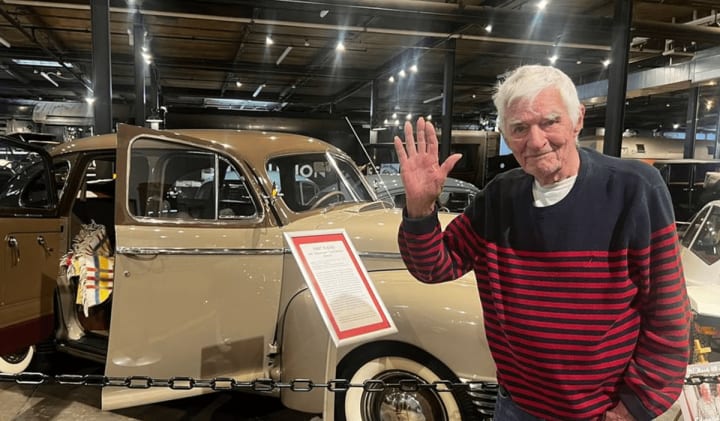
This car buff of Greenridge Place Memory Care in Westminster, Colorado really enjoyed the vintage car displays at the Forney Museum of Transportation in Denver, Colorado.

The maritime exhibit at Chicago’s Museum of Science and Industry was popular with residents of Harvester Place Memory Care in Burr Ridge, Illinois!
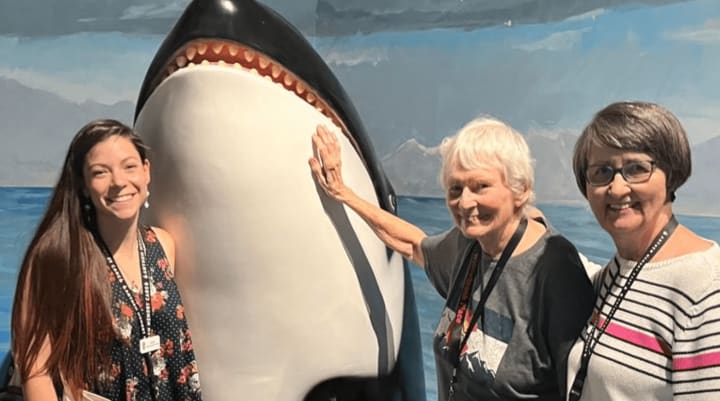
A fun “photo op” at the SeaQuest Midwest Aquarium brought out the smiles of residents of Willowbrook Place Memory Care in Littleton, Colorado.
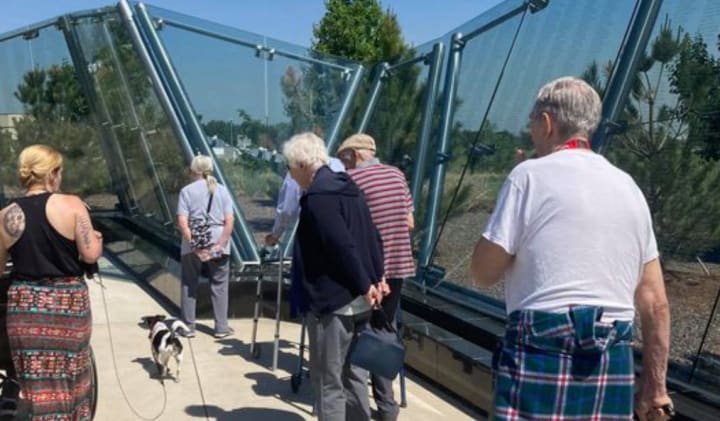
The Aurora, Colorado Freedom Memorial was particularly meaningful for these veterans and residents of Chelsea Place Memory Care.
If you have a loved one with dementia, take some time to research local museums and other places of interest to see if they have any special programs that cater to individuals with cognitive impairment. If you can’t find one, try to schedule your visit on a day that is less crowded. Consider taking a trusted friend or family member along. You may be surprised at a memory or two sparked by the visit or at the increased interaction between your loved one and those around them.
(Our header image shows a resident of Harvester Place Memory Care in front of a Titanic exhibit at the Chicago Museum of Science and Industry.)
Related Articles:
Thirty members from local Mullen High School's Girl's Basketball team dropped in to visit and swap valentines cards with Willowbrook Place Memory Care residents. Lots of fun, laughter, and joy was on tap as the residents delighted in learning more about the girls and their team. The event was covered by the local My Prime Time News.
Trinity Robinson, life engagement director at Willowbrook, explained to reporters how the residents "are energized by interacting with the next generation, and both groups enjoyed celebrating together."
You can read the full article here: https://www.myprimetimenews.com/basketball-team-seniors-with-dementia-spend-sweet-time-together/
(photo courtesy of My Prime Time News.)
Chasity Robinson Mwangi, senior community relations director for Morningside Place Memory Care, was interviewed by Porch regarding cybersecurity measures families should be taking to avoid scams and hackers. Chasity discussed several areas of focus, including identity protection, securing devices and accounts, and safe online practices. This is such an important topic, especially for older individuals who may be experiencing some cognitive loss and can easily become caught up in emotionally devastating, expensive scams.
There is much more, and you can access the full article (scroll down for Chasity interview) in Porch: https://porch.com/advice/online-hobbies-for-older-adults
(Photo courtesy of Porch)