
Residents and staff of Porter Place are busy making beautiful bracelets from puka shells and getting ready to put them on sale next week. All proceeds from the sale of the bracelets will go to support the Hawai'i Community Foundation's Maui Strong Fund. Jennifer Boonstra, life engagement director, was interviewed by Senior Living News.
"Having dementia doesn't diminish the desire to help others, near and far," she told the reporter. "Our residents continue to be committed to serving others, and it brings them great joy to make a difference in the world."
You can read the full story here:
Have you ever wondered why playing an old song gets mom’s or dad’s eyes to light up or gets them reminiscing about a certain moment in time they associate the melody with?
Music has that kind of power. It can instantly transport us back to a place and time in our lives, often one we thought we’d forgotten. This is also true for individuals with dementia. Because, while short term memory and other cognitive skills are impacted, often some long-term memory remains. And music has a way of tapping into it.
Is music a form of “medicine”?
The National Institute on Aging has written about what they refer to as “musical medicine”. According to Psyche Loui, head of Northeastern University’s Imaging and Neural Dynamics Lab, our brains are basically hard wired to recognize familiar tunes and rhythms.
Areas of the brain that are involved in this process include the auditory cortex, which processes sounds and the medial prefrontal cortex, which processes memories about ourselves.
Together they work to help an individual with dementia to recognize and respond to a familiar tune.
But there’s more to the power of music than sparking memories.
The NIA also cites the research of Julene Johnson, professor of cognitive neuroscience at the University of California at San Francisco. Her study of 390 participants found that active interaction with music, such as singing reduced feelings of loneliness and promoted an increased interest in life as well as higher self-esteem.
And there are studies in the works to determine if music can help individuals with dementia get a better night’s sleep and reduce anxiety and aggression.
While we still have much to learn about the power of music, we do know from our own observations that music has a way of soothing, energizing, and connecting us to deep memories and to those around us.
That is why our Anthem Memory Care communities regularly schedule music sessions and activities and bring musicians in to engage our residents. It may be an oldies band, a string quartet or a classical pianist, but the impact is the same. Residents smile more, laugh more and, most importantly, interact with those around them as they share old memories.
If you are caring for a loved one with dementia, you can see the power of music yourself.
Put on an old dance tune or ballad and watch how their face lights up. Try different tunes and ask them who their favorite musician was back in the day. Sit back and enjoy the music and the transformation it brings with it. Not just for your loved one, but for both of you!
(Our header photo shows residents of Grace Point Place in Oak Lawn, Illinois, getting down to the tunes played by the Frank Rossi Band, one of their favorite groups!)
If you have ever been in a situation where you need to take someone to the hospital you know the anxiety that accompanies that journey. After all, no one is at their best when experiencing pain and discomfort, let alone worry over what’s happening and how it will all turn out.
When that loved one is challenged with dementia, emotions and anxiety levels can escalate an already serious health issue.
If you are like most family caregivers, you are probably not prepared to handle these kinds of sudden, unexpected emergencies. But with a little planning, you can be.
The National Institute on Aging released a comprehensive list of ways to better handle emergency hospital visits for a loved one with dementia.
Here are five key tips:
While emergencies don’t wait for a convenient time to occur, you can meet them more effectively by being prepared in advance. Have your emergency bag stowed in a convenient place. Have phone numbers handy and other essentials ready to go.
By having an action plan in place and following the tips above, you can be prepared to meet the moment with as little unnecessary disruption as possible.
Related Articles:
Community Youth Services recently sent the following heartfelt message of thanks to the residents and staff of The Hampton Memory Care in Tumwater, Washington:
"We are overjoyed and grateful to extend a heartfelt thank you to the wonderful team at The Hampton Memory Care for their incredible act of kindness! Residents created a collection of stunning blankets that radiate love and care. These creations will find their home within the arms of the children and families served by Community Youth Services. Parents as Teachers, the Foster Care program and our Housing program will use these blankets to comfort individuals and families."
(Pictured are from left to right: Ryanne Zielinski, Parents as Teachers Director, Community Youth Services, Laura Lopez, Community Relations Director at The Hampton Memory Care and Tammy Chamberlain, Life Enrichment Director at The Hampton Memory Care)
Related Articles:
Most of us look forward to summer, as it brings with it warmer weather and the opportunity for picnics, vacations, family get-togethers, and maybe a few lazy summer afternoons spent with a good book.
However, when a family member is challenged with a dementia, such as Alzheimer’s disease, decisions about how to spend summer vacations and outings can become more complicated. Because of this, rather than planning around them, some families find it easier to exclude them altogether.
While, in some cases, having your loved one remain comfortable in their own home may make sense, with a little planning and effort, they, too, can enjoy being part of the festivities, connecting with their loved ones in a relaxed setting.
Here are some tips to make it easier to include your loved one in more summer fun:
Taking the time in advance to plan can lead to an outing or get-together that is both memorable and enjoyable for everyone.
And, finally, don’t neglect your own health and needs! Summer is great for family fun, but also a good time to schedule a week of respite care for your loved one so that you can catch up with doctor appointments and visit with your own friends.
A recent KSHB-TV segment about research conducted by the Stowers Institute includes a poignant spotlight on LuWayne Younghan, a Morningside Place Memory Care resident in Overland Park, Kansas and a Kansas City Art Institute graduate. Her paintings, along with her daughter, Cindy, help tell her amazing story. You can watch the full video here:
The feel and scent of soil brings back memories for residents, including 90-year old Carol Bitter who once won awards for her gardening skills. Carol was joined by other residents to grow and harvest vegetables. And now they’ve turned those vegetables into delicious recipes for their fellow residents!
You can read the full story in the Tinley News Patch here:
Those who care for a loved one with dementia will tell you how difficult it is to get the breathing room needed to take care of their own needs. Doctor and dentist visits are put on hold, coffee with friends is a rare event, and the mere idea of taking a vacation is off limits.
Neglecting to address personal needs, however, opens family caregivers up to serious physical and emotional health issues. And ongoing neglect can become a ticking time bomb often leading to a major health incident which impacts the entire family.
That is where respite care comes in.
What is respite care? It is an arrangement whereby a certified care provider steps in to care for your loved one over an agreed upon period of time to give you time to catch up on appointments, those missed coffees with friends, and maybe even a short vacation.
Choosing in-home care will bring a licensed professional caregiver into your loved one’s home and provide around-the-clock care. This may be for a day or longer, depending on your needs and their schedules. It can be arranged by contacting a local agency that specializes in in-home care. Alternatively, an assisted living or memory care community may be a good fit, providing a level of care that is hard to achieve at home.
In addition to the benefits that respite care provides to caregivers, a short stay in an assisted living or memory care community can benefit your loved in the following ways:
Finally, when you return from your respite, your loved one will benefit from a caregiver who is refreshed, recharged and ready to put more energy and compassion into providing loving care for them.
Our Anthem Memory Care communities are here to help give you that time off you need. All of our communities provide respite care. Find a community near you and give us a call. We’ll help you schedule a preliminary visit
Willowbrook residents, staff and families found a unique (and fun) way to raise funds for the Alzheimer's Association...a pool tournament! The action-packed event included a "high stakes" game of pool, lots of other activities, and a silent auction. Everyone enjoyed the day and all money raised went to help fund research for Alzheimer's disease.
The event was mentioned in the local Villager newspaper. You can read more about it here:
https://villagerpublishing.com/whats-happening-6-15-23
Wearing caps and visors, the Morningside Walking Club sets out for one of their regular walks. These walks are healthy, invigorating, and fun! But the best walks are those that take them to the doors of Casey's on Metcalf Avenue to cool off with some ice cream. Local KSHB-TV caught up with the group recently, chatting with residents and staff. You can read the full story here:
https://www.kshb.com/news/local-news/walking-club-helps-memory-care-residents-in-overland-park
When family members walk through our doors, they are not just visiting their loved ones, but also the nursing assistants who care for them. That’s because these are the people who are closest to the residents. They know exactly what mom or dad needs at any given time. They know their life stories, their likes and dislikes. And they know their family members, in many cases, as well as their own.
Depending on their tasks and the community, they may be referred to as “nurses' aides”, “resident care assistants“, health aides” or “CNAs“ (certified nursing assistants). Regardless of their name tags, however, these are some of the most loving, compassionate, observant, capable individuals you will ever meet.
Depending on the needs of each resident, a nursing assistant may help in the following ways:
These are just some of the ways in which nursing assistants help residents.
They are close companions to residents, picking up on cues that others, even family members, may miss. That is why they are the eyes and ears for doctors and nurses, quick to recognize when a resident may have an impending health issue or when they have a special need.
Who are these amazing, selfless individuals? Sharing a few photos of some of the heroes who protect, engage and love our residents every day:
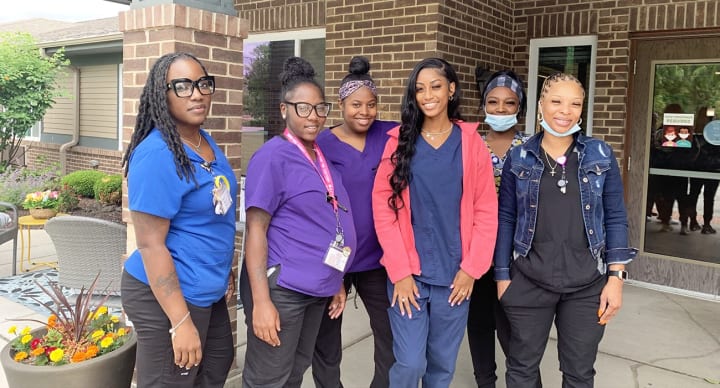
Porter Place Memory Care nursing assistants in Tinley Park, Illinois. From left: Rae, Danae, Darian, Satoria, Brianna and Tyra
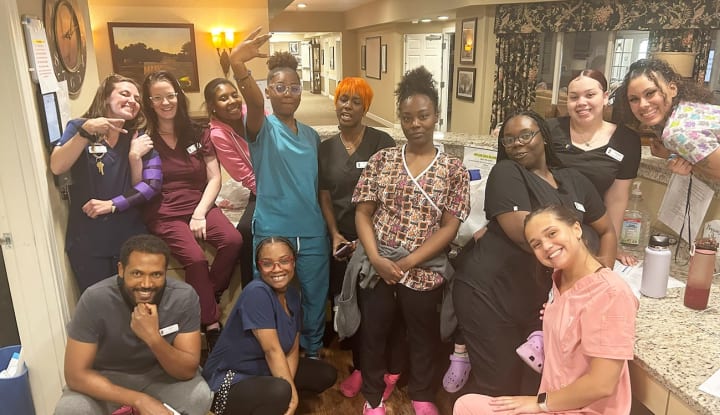
The compassionate, fun-loving nursing assistants of Elk Ridge Memory Care in Maplewood, Minnesota
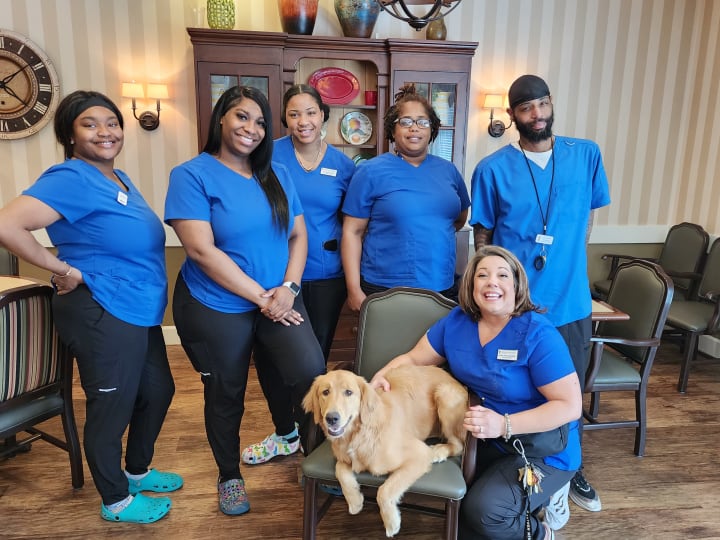
And these nursing assistants from Greenfield Estates Memory Care in Akron, Ohio even have a canine helper!
Our Anthem Memory Care nursing assistants form deep and meaningful relationships with residents. We invite you to visit a Anthem Memory Care community near you and take a moment to chat with them. You’ll find them eager to engage with you, answer your questions, and talk about how much they love our residents.
Finally, if you have a loved one diagnosed with dementia, it is never too early to start researching memory care providers. You are always welcome to give us a call or drop in to one of our communities. We’re here to help!
(Our header image is of the amazing nursing assistants team at Chisholm Place Memory Care in Wichita, Kansas!)
Related Articles:
Showing support for the Alzheimer's Association's Longest Day, Morningside residents, staff and families held a car wash fundraiser! Everyone had fun washing and polishing up the cars. Good clean work for a great cause.
The event was covered by local KMBC TV. See the video below:
Residents, staff and families enjoyed a very special Father's Day event --- a vintage car show! It was a great turn-out and everyone delighted in checking out the cars. The event even sparked some special memories. It was covered in the local Press Enterprise. You can read the full story here.
Our Anthem Memory Care communities are actively involved in fundraisers to support Alzheimer's research. We believe that it is important for all of us to do our part to spread greater awareness and to encourage others to get involved.
Our staff, residents, and families work together to design and plan events in which everyone can participate. That includes, not only our families, but members of the greater community.
And we've been busy lately! Here are just a few of our most recent fundraiser events.
The above video is coverage from KIMT-TV news of the Cascade Creek Memory Care Bowl-a-Thon in Rochester, Minnesota to raise money for Alzheimer’s research.
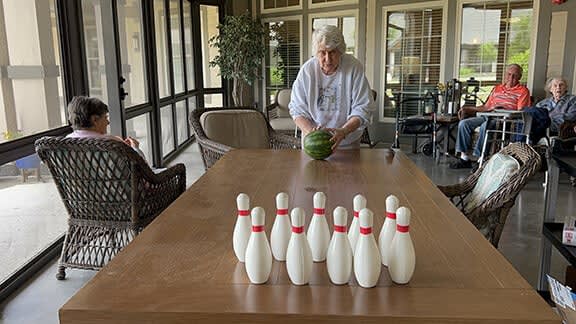
Liberty Place Memory Care in West Chester, Ohio also held a bowling fundraiser. But with a fun twist … watermelons!
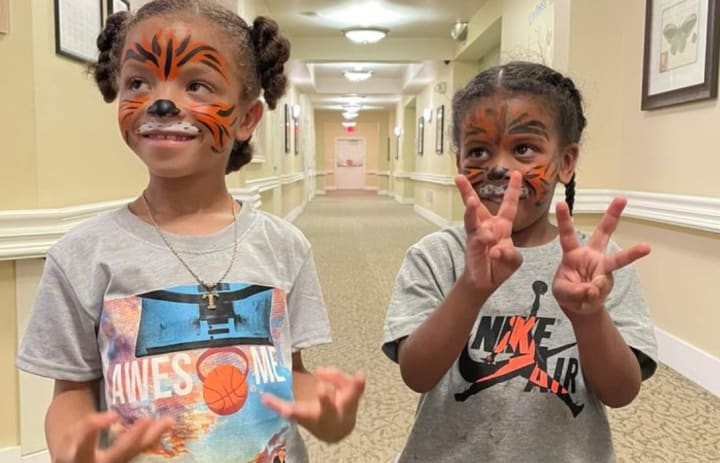
Face painting was just one of the many fun family activities at the Chisholm Place Memory Care fundraiser barbeque in Wichita, Kansas!
Morningside Place Memory Care’s Summer Fair in Overland Park, Kansas raised funds through fun activities and raffles. This video is courtesy of KSHB-TV.
What are you doing to get involved in the fight to end Alzheimer’s disease? There are so many ways to contribute to the cause. Want some ideas? Visit the Alzheimer’s Association website and learn more about how you can do your part to support Alzheimer’s research and spread awareness within your community.
And we invite you to contact any of our Anthem Memory Care communities. We always have events going on that members of the greater community can come and enjoy while supporting a good cause.
(Our header image shows enthusiastic participants in Cascade Creek’s Bowl-a-Thon!)
To usher in summer, the residents and staff at Liberty Place Memory Care decided to have some fun and change up their bowling activity. Instead of using a bowling ball they used mini watermelons to knock down the pins. And it worked! It was lots of fun and a unique way to celebrate the first day of summer. The event was covered by local WLWT-TV. You can read the full article here.