Anthem Memory Care logo

Have you played Wordle yet? Even if you haven’t, you’ve probably heard of this latest game frenzy as players proudly post their scores all over social media. It’s a fun little puzzle that challenges the player to put different letters together to eventually arrive at the “correct” five letter word. And the desire in all of us to test our abilities has led to Wordle becoming very popular indeed.

Many believe that playing games helps stimulate our brains and, therefore, is a good way to improve cognition and sharpen memory. Research has found that, in many ways, this is correct. And yet research also cautions us not to look to brain games as a replacement for human interaction and camaraderie.

The value of playing games is not so much the game, itself but the socialization around it.

Much of the value of playing games, like Wordle, is the social experience of sharing results and engaging in friendly competition with friends. An article in VeryWellMind.com recently cited insights from Assistant Professor of Psychology, Matthew Baldwin, who noted, “When we experience something together, the feelings get amplified so when we have fun with Wordle, that feeling is amplified when we remember that we are playing with millions of people at the same time.” This sense of having a common goal, creates what Dr. Baldwin refers to as “group cohesion”.

That doesn’t mean games don’t benefit our brains as well.

Research has indicated that games and word puzzles, like Soduku, crossword puzzles (and Wordle) force us to concentrate and use our problem-solving skills. This stimulates areas of our brains that studies have shown can help slow the progression of cognitive decline. Video games have also become popular in stimulating cognitive skills and are also known to improve response times and hand eye coordination, both of which are important to being able to perform the activities of daily living.

And yet, most research indicates that the greatest value derived from playing games comes through interaction with other players.  

What does all this mean to those of you caring for loved ones living with dementia?

It means that you should encourage your loved one to play games with you and other family members. Games like checkers, cards and other games that are played together not only challenge the brain but inspire conversation and a sense of camaraderie that is so important to helping those with dementia connect with those around them.

At Anthem Memory Care communities, we love games. Whether it’s cornhole, Jenga, bingo or working a jigsaw puzzle together, we understand the value of personal interaction and socialization that games bring out in our residents and staff.

So, go ahead and break out a deck of cards or other favorite family game and “let the games begin”. And, a little Wordle here and there won’t hurt either!

(Our header image shows a resident of Emerald Place Memory Care in Glenview, Illinois participating in a rousing game of Jenga as fellow residents and staff cheer her on!)

Back in the early days of the pandemic, when everyone was quarantining behind closed doors, something amazing was in the works outside the windows of our Anthem Memory Care communities – window decorating!

While we certainly had enjoyed window decoration before the pandemic, the desire to bolster the spirits of our residents poured out into the greater community and we were privileged to host scores of family members and youth groups who put their creativity and energy to work, decorating our windows and bringing so many smiles to our residents.

Well, the good news is that the “fine art” of window painting and decorating continues! And we’re glad it does for so many reasons, including:

  1. Residents enjoy looking at the beautiful colors and messages displayed on their windows. Residents like to smile and wave at the young artists as they transform their windows. It connects them to a younger generation in a fun way.
  2. Students, youth groups and family members get to show their love and respect for residents by creating fresh and fun messages and images. It is a purposeful activity that raises the sprits of everyone.
  3. The artwork itself brings a festive, personal touch of décor to our windows that visitors can enjoy as well as everyone who works inside our doors.

It’s also a great way to celebrate seasonal holidays.

Recently a window-art project at Cascade Creek Memory Care in Rochester, Minnesota was covered by local TV channel, KTTC. The reporter interviewed members of the local youth group from Church of the Resurrection. Their mission was to create some special artwork to celebrate Valentine’s Day. “We went outside and just started decorating the windows,” youth group member, Claudia Pelowski, told the KTTC reporter. “All the older people would come and watch us, and they would clap, and they thought our drawings were really nice,” she said.

Below, a Cascade Creek resident and family member enjoy lunch in front of a festive Valentine’s window!

The window decorating brought a lot of smiles (and applause) from everyone, from residents to staff to family members.

Tiffany Bell, life engagement director at Cascade Creek, talked about the project and the impact it had on residents and staff. “This opportunity just seemed to present itself as a wonderful way to brighten the days of our residents and spread a little bit of cheer right here as we head into Valentine’s Day,” she said.

(Our top image shows a loving message artfully drawn on an outside window at Cascade Creek. Image is courtesy of KTTC TV.)

 Related Articles:

Having a sense of purpose is important to all of us, perhaps even more so to individuals living with dementia. Numerous studies over the years have identified a clear link between engaging in purposeful activities and exhibiting sharper cognitive function. While there is no cure for Alzheimer’s disease, participating in activities that are meaningful enhances both physical and mental well-being, each of which plays a key role in brain health.

You may have heard of the Rush University Medical Center study, conducted over a fifteen-year period, involving a group of 1,400 seniors. The results were striking. The study found a 30% lower rate of cognitive decline among those who scored high on a “purpose-of-life” scale. In other words, those who felt they were contributing to the greater wellbeing of those around them were able to sustain higher cognition than those who did not.

That’s a powerful testament to the importance of finding purpose in things we do each day. It is one of the reasons that the staff at our Anthem Memory Care communities encourage our residents and staff to use their talents and skills in purposeful activities.

Below are just a few images of Anthem Memory Care residents doing just that…

Memory care in Aurora Colorado

Chelsea Place residents embark on a break-room renovation project. They start by refinishing the old chairs.

Chelsea Place Memory Care Aurora Colorado

After adding some fresh paint, here’s the final product! Well worth their efforts. Doesn’t it look great?

At Vineyard Place the cooks and bakers can regularly be found in the kitchen. This resident makes up a batch of her special chicken pasta salad.

Porter Place residents take a break from building some amazing wooden flower beds.

Finding daily meaning in the things we do is essential to our well-being. If you are a family caregiver for a loved one living with dementia, take every opportunity you can to encourage them to continue to do things that have brought them joy and purpose throughout their lives. You may be surprised at how well they are still able to do these things. And it will bring much needed moments of joy into everyone’s day.

(Our top image is of an Emerald Place resident checking out gardening tools at Home Depot in preparation for spring planting projects.)

February is National Heart Month, which puts a much-needed emphasis on increasing awareness of heart disease along with things we can all do to improve the health of our hearts.

What you may not know, however, is that there is a clear link between heart health and brain health! Furthermore, having a healthy heart helps individuals stay cognitively healthy longer. And that means it also helps those with dementia retain as much cognitive function as possible for as long as possible.

According to the Centers for Disease Control (CDC), one type of dementia linked closely to heart health is vascular dementia. It occurs as the result of multiple “mini stokes” or “silent” strokes. This can lead to dementia, causing memory loss, slowed thinking and personality changes.

At our Anthem Memory Care communities, staff members work closely with our clinical team to make sure that our residents are following healthy guidelines to keep their bodies and minds optimized every day.

You can do this as well for your own health and that of your families. Here are five tips from the CDC to help reduce your risk of heart disease, stroke and vascular dementia:

  1. Eat healthy foods. These include foods that are rich in omega-3 fatty acids (e.g. salmon) every week. Limit salt and include whole grains, vegetables and fruits. A good diet to follow (with guidance from your physician) is the Mediterranean Diet, which includes these foods in a well balanced daily diet.
  2. Limit alcohol consumption. If you drink alcohol, do so in moderation. Alcohol raises blood pressure and can also increase the risk of some kinds of heart disease.
  3. Control your blood pressure. This is the leading cause of heart disease and stroke due to the added pressure on the blood vessels. Studies are now finding a link between uncontrolled high blood pressure and dementia. Be sure to get your blood pressure checked and adhere to your physician’s recommendations.
  4. Don’t smoke. We have known for years the many negative effects of smoking. It damages blood vessels and increases the likelihood of clotting which can lead to a stroke or heart attack. Now is the time to take steps to quit.
  5. Get daily exercise. Experts recommend 150 minutes of moderate-intensity activity per week. It is always important, however, to consult with your doctor before starting a new exercise regimen.

It’s never too late to form a new habit. And all of these are great habits to form! Plus, knowing that heart issues can impact the brain makes it even more important to make decisions that will benefit both.

If you are caring for a loved one living with dementia, all the above are important to help them retain as much cognitive and physical health as possible. While we have yet to discover a cure for dementia, a healthy lifestyle is imperative to their well-being and quality of life.

Happy National Heart Month!

 Related Articles:

A recent article in AARP Magazine cited a Federal Trade Commission (FTC) report that has logged over 670,000 public complaints of scams, many of them related to COVID-19 topics ranging from stimulus checks to miracle cures.

These scams are dangerous for all of us, but particularly concerning when they prey upon aging, cognitively challenged individuals, such as those with Alzheimer’s disease and other dementias.

The pandemic appears to have brought out the worst in the hackers and scammers (as if they could get worse!) and they continue to target the most vulnerable of us with schemes and tricks that cost consumers over $600 million last year.

While we may not be able to stop these criminals in their tracks, there are things we can learn about them and things we can do to safeguard our loved ones from becoming victims.

Here, taken from the AARP article, are just a few of the latest scams to be aware of:

Fake tests and cures

This comes in the form of fake “pop up” testing clinics, in which imposters pose as healthcare clinicians. They walk the wait lines obtaining personal details (medical, financial, etc.) about each individual as they wait for their “test”.

Robocalls are also being used, directing consumers to bogus websites selling test kits and, in the process, collecting financial information from the unsuspecting victim.

Calls from “The IRS” and “Banks”

Scammers masquerading as IRS or banking officials are infiltrating the phone lines these days with robocalls engineered to lure unsuspecting consumers into giving up personal and financial details to “get a COVID stimulus check”.

It is important to note that these callers identify themselves as IRS representatives or bank professionals.

Phishing and spoofing

Cybercrooks are particularly adept at setting up fake websites and luring consumers into their webs of deceit through emails. Referred to as “phishing”, these emails are cleverly “branded” using nomenclature and terminology that can be convincing to an unsuspecting consumer. Once on their site, they will have already collected information about the consumer from their IP address. Then, they’ll ask for financial information and passwords. Once they have that, they’re into the consumer’s bank account, which will be quickly cleaned out.

This is all pretty scary to think about. There are things you can do, however, to protect yourself and vulnerable family members.

Here are 5 tips to pass along to your family members, especially those who are older and may have some cognitive loss:

  1. Never click on links or download files from unexpected emails. If in doubt, contact the institution using a published phone number off a bill or other material. Do not call the number shown on the email!
  2. Never share personal information such as social security number, credit card numbers in response to an unsolicited call, text or email.
  3. Be wary of phone calls, emails or texts urging you to invest in a “hot” new stock.
  4. Be wary of fundraiser calls or emails purporting to help COVID victims or fund research.
  5. Seek legitimate COVID testing sites. If in doubt, check with your local healthcare provider.

Aging individuals, particularly those challenged by dementia, are more vulnerable than ever to these heartless, senseless scams.

The more we can do identify them, report them and protect our loved ones from falling prey to them, the better chance we will have to wipe out more of this criminal activity and bring to justice the perpetrators.

For more information about the latest scams, you can visit the FTC Scam-Alert website.

Stay safe out there!

 Related Articles:

A series of black and white images of residents’ hands accompany descriptions of their life work, talents and passions at Chelsea Place Memory Care, in Aurora, Colorado.

It is a creative and beautiful way to honor residents and celebrate the remarkable individuals living inside their doors. It also inspires a level of conversation that is deeper, richer and more rewarding for the residents, family members and the care staff. 

At our Anthem Memory Care communities, we are big believers in storytelling, especially when the stories shed light on the amazing lives of our residents.

So, when the team at Chelsea Place began to share their “These Hands” stories, we knew it was something really special that everyone should be able to experience.

Below are a few of their awe-inspiring images along with short descriptions of the individual each pair of hands represents. Enjoy!

These hands were not made to sit idle. These hands repaired, maintained, and installed parts on United Airlines planes as an Airline Mechanic for nearly forty years. These hands have fixed and tinkered with antique cars and model trains. They’ve aimed and pulled the trigger during many target shooting sessions. These hands clap and celebrate and cheer on the Denver Broncos at every game!

These hands grew up alongside nine siblings in a Texas orphanage where their mother was a nurse. These hands raised four children of her own. They played piano and guitar and quilted the most lovely pieces. These hands dedicated many hours to the Girl Scouts and the Epilepsy Foundation. These hands taught oil painting classes, kept house and served as a caregiver. These hands are most delighted with a bowl and a spoon and a heaping helping of butter pecan ice cream.

These hands have held his four babies, seven grand-babies and two great grand-babies. These hands have troubleshot emissions for thousands of automobiles for over 29 years with the Ford Motor Company. These hands create exceptional works of art, from oil painting to coloring mandalas. These have hands guided and provided in profound ways.

These hands began on the Big Island where her parents and siblings were all born. These hands joined with her future husband's when they met, just after Pearl Harbor. These hands have worked hard in her own beauty shop and later answered phone calls as a secretary. These hands loved to grip the steering wheel and take adventurous drives in the mountains, sure to explore every side road and scenic view. These hands played the strings of the ukulele to her favorite tune, Aloha Hoy.

These days you’ll find these hands tucked neatly into a fresh pair of Wranglers, but that hasn’t always been the case. These hands have raised and tamed dozens of horses. These hands delivered mail for the postal service for more than 30 years. These hands have gently led the love of his life around the dance floor.

What wonderful stories are held within the hands of your aging loved ones? Take time to explore those stories and celebrate the amazing lives who have lived to tell them. If carefully preserved, they will last for future family generations to discover.

(Our header image is of a resident who continues her lifelong dedication to the Bible and love of reading scripture.)

 Related Articles:

It is interesting to note that, while cognition is impaired with Alzheimer’s disease, some memories and abilities can and do remain. Remembering the words to a favorite song or recognizing an old photograph are a few of them. Skills acquired in youth, like playing the piano, knitting, or gardening can also remain intact.

One of the skills that all of us at Anthem Memory communities enjoy unlocking are those of our resident family bakers and chefs. Old recipes are often brought into our communities by family members who encourage their mom (or dad!) to throw on an apron, roll up their sleeves and start mixing and baking a family favorite that once brought so much joy to their families.

Numerous studies have shown that engaging in activities such as baking has many potential benefits including healthy sensory stimulation as well as reduced stress and agitation levels for those living with dementia.

We agree. In addition to the purposeful nature of baking and cooking, re-connecting our residents to these past pleasures has proven to have a wonderful ripple effect, igniting treasured memories and forging new connections with those around them.

Here are a few wonderful moments of baking pride and joy captured by our communities…

wonderful moments of baking pride and joy captured by our communities…

These residents of Cascade Creek Memory Care in Rochester, Minnesota pose with a tray of their delicious banana cream parfaits. A few minutes after this picture was taken, they were all gone!  

This Porter Place Memory Care (in Tinley Park, Illinois) resident chops carrots, just one of the savory ingredients in her fresh, made-from-scratch vegetable soup.

…and here’s the soup!  

When the resident cooks of Emerald Place Memory Care in Glenview, Illinois take over the kitchen delicious things happen.

For these residents of Highline Place Memory Care in Littleton, Colorado, half the fun is sharing recipes with local girl scouts eager to start baking.

Then there are the competitive residents of Willowbrook Place Memory Care, also in Littleton, Colorado, who hosted a recent cookie contest, an event that attracted the greater community and was covered by local media. We still don’t know who won. But we’re told all the entries were “delicious”.

Do you have a loved one with dementia who used to enjoy baking or cooking? Find a simple recipe, put the ingredients out on your tabletop and make something delicious together. Of course, it’s important to be mindful of his or her abilities and make sure your environment is safe and easy to navigate. But carving out some time to stir, mix, bake and cook together is time well spent. Relax, take your time and it may become a new pastime you can both enjoy and look forward to.

(Our header image shows residents of Chelsea Place Memory Care in Aurora, Colorado in the process of making their famous chocolate chip cupcakes.)

 Related Articles:

If you made a list of new year’s resolutions, chances are you’re already running into a few challenges keeping them, right?

You’re not alone. Lists are easy to make but not quite as easy to follow. And yet, for family caregivers of loved ones with dementia, a good list of “dos” that are actually “doable” is essential to tackling day to day challenges as well as caring for your own needs.

We have seen, first hand, the improvement in quality of life for family caregivers that results from setting positive personal goals and tackling them one by one.

Here are 5 great tips to help you navigate 2022 and make it a truly wonderful year for yourself, your loved one with dementia and your family.

  1. Expand your support network. Reach out to your friends and family members and make plans to get together or call more frequently in the new year. If you haven’t already done so, consider finding a good therapist. Look for someone with experience in elder care and who has resources to fill in the gaps between appointments.
  2. Start a journal (or pick it up again). And keep with it! Like anything else, it takes time and consistency to build a new habit. Writing, even if just a few sentences per day, provides an outlet that has an amazing ability to reduce stress and keep you focused on what really counts.
  3. Take up yoga and/or meditation. A study cited by Mayo Clinic reports that caregivers who participated in an 8-week yoga group experienced both physical and emotional benefits. They reported feeling peaceful and relaxed. You can too.
  4. Join a dementia support group. There are many available. You can check out our Anthem Memory Care communities and find a local group. Many are also offered virtually.
  5. Look into long term memory care. While you may be in the earlier stages of caring for a loved one with dementia, the time may come when you want to transition them to a care environment specifically created to serve their physical, cognitive, and emotional needs. Now is the time to begin looking.

Remember, too, not to neglect your own physical health. Whether you join a gym, work out to exercise videos or just start taking walks, all are great ways to recharge your body and clear your head. When you feel better physically, you’ll find that a lot of other things fall into place.

A new year is a chance for a new beginning. Reach out and re-connect with old friends. Give yourself more “me” time and seek things that bring you joy. Celebrate them.

The new year is what you make of it. So make it something wonderful. You deserve it.

 Related Articles:

Residents of Willowbrook Place dusted off their favorite tried-and-true family cookie recipes, rolled up their sleeves and got to work baking. The event was a holiday cookie bake-off and tasting contest and everyone got involved from staff to residents to their families.  

The event was covered by local Colorado Community Media reporter, Bob Wooley, who interviewed Sarah Kressig, Willowbrook Place’s life engagement director. “Having dementia doesn’t diminish the joy of celebrating family traditions,” Sarah told Bob. “Holiday cookies are more than sweets; they are happy memories and will connect the residents with their loved ones.”

You can read the full article here.

What a year it’s been! And we’ve experienced a lot -- from keeping residents healthy through vaccinations and following protocols, to the joy of experiencing safe family visits to businesses re-opening and schools back in session. The list goes on!

At our Anthem Memory Care communities, we are fortunate to have experienced many, many moments of joy in 2021, along with our residents and staff members.

As we look ahead to a new year, we thought we’d share a few of our favorite moments from 2021…

Our wonderful nurses and healthcare staff worked hard to keep our resident safe and healthy!

Residents of Harvester Place Memory Care in Burr Ridge, Illinois joined with local high school students in Day of Service projects to help local charities.

Shopping trips were enjoyed by many residents (Here, a resident of Emerald Place Memory Care in Glenview, Illinois, selects seeds at Home Depot.)

The resident-gardeners came out to do their spring planting at Vineyard Place Memory Care in Murrieta, California.

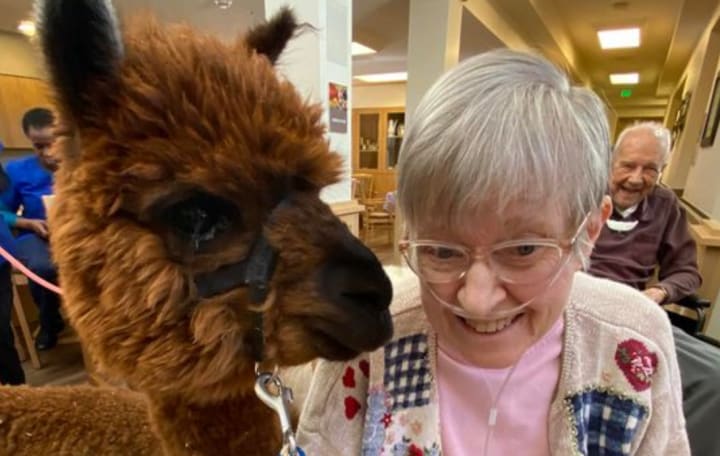
Visits from 4-legged friends were always welcomed by resident of Morningside Place Memory Care in Overland Park, Kansas.

Residents continued to engage in creative projects that were purposeful and produced some amazing results! (A talented resident of Porter Place Memory Care, in Tinley Park, Illinois creates a beautiful piece of tie-dyed fabric.)

We took advantage of opportunities to produce healthy and delicious treats from locally grown fruits and vegetables. (At Chelsea Place Memory Care in Aurora, Colorado, a resident and visiting family member make a fresh batch of apple cider.)

When football season rolled around Chisholm Place Memory Care residents were more than ready for kick-off!  

Weather permitting, walks in the park were a great way to enjoy some fresh air and beautiful scenery. (Here, residents of Willowbrook Memory Care in Littleton, Colorado give a wave and smile for the camera.)

Bus trips to local areas of interest were a regular treat for residents of Highline Place Memory Care in Littleton, Colorado.

Finally, as the holidays approached, the gifting began! (Here a resident of Greenridge Memory Care in  Westminster, Colorado surprises a well-deserving member of the dining team with a special gift.)

There are many more moments captured; too many to share here. So we invite you to visit the webpages and Facebook pages of our communities to explore more of our special moments of joy.

We hope that you will take a moment during the holidays to pause to re-cap a few of your own joyous moments with your families. Even in challenging times, such as these, they are there if you look for them.

Finally we hope you are staying safe and healthy while you enjoy the holidays and all of us at Anthem Memory Care communities wish you and your loved ones a healthy, happy and joyful new year!

(The top image of a Cascade Creek Memory Care resident and family member is so full of joy we couldn’t resist using it as our header image!)

 Related Articles:

Holiday travel is always a highly energized event with the inevitable last-minute rush to either hit the road or get to a busy airport on time.

All the excitement can bring with it significant stress levels for anyone caught up in the holiday rush. You can imagine how all this hustle and bustle affects an individual with cognitive challenges, such as dementia. Perhaps you’ve already experienced it with a loved one.

While nothing can completely eliminate the anxiety of leaving the safe haven of home for travel for an individual with dementia, there are ways to turn the volume down on stress. And that goes for yourself as well!

Here are some helpful tips that our Anthem Memory Care community families have found useful over the years:

If you’re traveling by car:

  1. Plan a rest stop or two. Depending on the length of your drive, you may need several stops. Check out your mapping app, such as Google Maps, and scout ahead for rest places.
  2. Put some music on! It’s easy these days to load music on your smart phone or grab a few holiday CDs for the road. Music is a form of therapy all its own. Sing along, while you’re at it! It will make the trip go smoother and seem shorter.
  3. Bring along familiar items. That might be your loved one’s favorite blanket, pillow or other familiar items, which can go a long way towards keeping stress and anxiety to a minimum.
  4. Take safety precautions. Make sure your door locks are on and seatbelt connectors covered, especially if your loved one has a habit of wandering and/or unlocking doors.

If you’re headed to the airport:

  1. Take advantage of special services for those with disabilities. That’s what they’re there for! You may be able to secure a spot on an airport scooter as well as access wheel chairs or other aids that will make your loved one’s experience easier and more comfortable.
  2. Get to the airport early! This is always a good idea, especially over the holidays. With a little patience you can find areas that are less cluttered and wait there with your loved one.
  3. Pack snacks and water. Hunger and thirst can come on quickly, especially when one is feeling anxious or stressed. Make sure you bring favorite snacks and bottled water.
  4. Take advantage of early boarding for those with disabilities. Window seats can be a good move for an individual with dementia in that they can feel less constricted and further away from the busy aisle.

Remember, before you travel to make sure your loved one has a good night’s sleep and, if possible, has a good meal before you leave. We realize that this can be more challenging if you have an early morning flight. However, keeping as close as possible to a normal routine in the hours prior to leaving can go a long way towards reducing unnecessary stress.

Finally, some advice to you: When things get stressful, take a deep breath and remind yourself that the travel experience is temporary. Try to remain focused on the days ahead and welcome visits with family and friends. They can be an amazing source of support for both your loved one and you.

Happy holidays!

(The top image is of two lovely residents of Harvester Place Memory Care in Burr Ridge, Illinois out and about, enjoying one of many wonderful bus trips taken this last year.)

As the Christmas clock winds down many of us will be rushing out for last minute gifts and stocking stuffers. When you have a loved one living with dementia, however, your shopping list can become a bit more challenging since the things they may have enjoyed years ago may no longer be practical.

You may also have extended family members and friends asking for advice on what your loved one might want, leaving you wracking your brain for new ideas.

At our Anthem Memory Care communities, we understand how gift giving can become more complicated when it’s for a loved one with dementia. So we’ve put together some ideas to get you thinking. You might pass along some of them to others as well.

  1. Digital, back-lit calendars. These come with oversized numbers and letters, making them easy to access and read.
  2. Digital photo frames. While they have been around for quite a while, these framed digital photo “shows” continue to be popular. They allow you to upload dozens of your favorite photographs as images that can be sorted and arranged in order.
  3. Warm sweaters and blankets. Today we have sherpa and fleece lined garments that are super soft and warm. For an individual, the touch and feel of something soft, like a blanket, can be soothing and comforting as well as practical.
  4. Lotions, creams and scents. Sensory stimulation is something that can greatly benefit individuals with memory loss. Look for scents that your loved one has always enjoyed. Rose, citrus and herbal scents are some of the more popular ones.
  5. Card games and puzzles. Look for those which have been designed for individuals with memory impairment.
  6. Gift baskets. This is a great way to package together a number of small items that your loved one likes. You can purchase items and create the basket yourself or shop for pre-packed baskets with teas, coffees, cookies or other items that you think your loved one would like.

Thankfully, most of these items are available online. Be sure to check the delivery dates as we get closer to Christmas Day. And, above all, don’t forget that gift giving should be an enjoyable experience. The key is to keep your gifts simple and meaningful.

And remember, it really is the thought that counts.

(The top image shows a festive row of Christmas gift bags ready to be opened at Greenridge Place Memory Care in Westminster, Colorado!)

 Related Articles:

At our Anthem Memory Care communities, we’re all about giving back. From our caring, compassionate team members to our wonderful residents, we’re happiest when we are doing our part to bring happiness to those who are less fortunate and need our help.

The act of working together to help those in need brings many benefits to individuals in general, especially to those living with dementia. Some of these include:

  1. A sense of purpose. Meaningful activities that benefit others awaken a sense of duty in all of us which, in turn, brings a greater realization of self-worth.
  2. A greater connection with those around them. Working together, whether with other residents or with local school children, brings a sense of camaraderie. It also facilitates conversation, something that can be very beneficial to those with dementia.
  3. A feeling of genuine accomplishment. Seeing a job through to completion brings with it a sense of satisfaction, having accomplished something worthwhile.

The end result is an authentic, earned feeling of wellbeing brought about by the knowledge that they have worked together for the greater good.

It is with that spirit in mind that our Anthem communities work with others in our community – schools, charities and other organizations – to engage, along with our residents, in programs that give back. Below are some photos of our residents and staff throughout the year engaging in activities for worthy causes.

Harvester Place Memory Care residents take a short break from donating their time and talents at the local Food Bank.

A Chelsea Place Memory Care resident makes ornaments for the local Ronald McDonald House.

This Harvester Place Memory Care resident works with a local school student to make unique dog toys for the local animal shelter.

A resident of Grace Point Place Memory Care works on a special giant Christmas stocking for local charity.

Willowbrook Place Memory Care residents make goody bags for a local rehabilitation center.

This is the season of giving as well as receiving. If you are caring for a loved one who is living with dementia, take some time to identify local charities and holiday events in your area that are geared towards helping the homeless and other individuals in need over the holidays. There are plenty of opportunities to donate and contribute to worthy causes.

Participating with your loved one, even in a small way, will help give both of you the wonderful feeling of accomplishment and the many benefits that come with it!

(The top image is of a Emerald Place Memory Care resident helping to put together baskets for elderly individuals living alone.)

 Related Articles:

For many of you this Thanksgiving may be the first time you’ve been able to get together with family and friends. Now that’s something to be thankful for!

However, for those of you are caring for a loved one who has been diagnosed with dementia, these are truly trying times. Even more so with the pandemic continuing to threaten those all-important gatherings and the many hugs that were sacrificed to social distancing last year.

So it can be especially challenging to take a day to think about all that you are thankful for.  What you may not be aware of, however, is that stopping to identify those things in your life you are grateful for actually has therapeutic value. A Harvard research study revealed that:

“In positive psychology research, gratitude is strongly and consistently associated with greater happiness. Gratitude helps people feel more positive emotions, relish good experiences, improve their health, deal with adversity, and build stronger relationships.”

With that in mind, here are a few recommendations from professional therapists and other family caregivers to help you tune into a more “thankful” side of your daily life.

Developing a fresh, more thankful mindset doesn’t happen overnight. Learning anything new takes time and a consistent effort. And reinforcement helps as well.

There are many resources available to help family caregivers better understand their challenges and find ways to meet them, while preserving your sense of wellbeing and protecting your health. Consider contacting one of our Anthem Memory Care communities and ask about our dementia support groups. There you can share your thoughts and struggles with others in similar situations as well as get insights from our professional therapists.

Whichever way you plan to celebrate Thanksgiving this year, know that there is always something to be grateful for…if you look for it. Take some time to identify the “thanks” in your Thanksgiving. It might make all the difference.

Happy Thanksgiving.

(At Anthem Memory Care, we’re so thankful for everyone inside our communities. That includes not only residents but our amazing staff members. The top image is of a resident and staff member of Chisholm Place Memory Care in Wichita, Kansas!)

 Related Articles:

Those of you caring for an aging family member know that one of the things you need the most is access to resources. Family members often feel isolated and can benefit from professional insights and information to help navigate the day-to-day challenges and learn the right course of action to take at any given time.

November is National Family Caregivers Month. At Anthem Memory Care, however, we believe caregivers deserve recognition and support every month of the year.

At our communities, we like to consider ourselves a resource for families within our greater communities. That includes yours. That’s why we make it a point to engage regularly, providing advice, ideas and a sounding board for those caregivers who need it.

We also want to make you aware of the numerous external organizations and online resources available to provide insight and help with the day to day needs of family caregivers as well as help plan for the future.

The following list shares some of those resources, courtesy of the U.S. Department of Health and Human Services:

By the way, we’d like to our name to this list and welcome you to contact any one of our communities. Especially those of you who are caring for a loved one with dementia.

Above all, know that you are not alone in your journey. We’re here to help you find specific local resources to help you with your caregiving activities and plan for the future. Don’t hesitate to call upon us!

By the way, we’d like to our name to this list and welcome you to contact any one of our communities. Especially those of you who are caring for a loved one with dementia.

Above all, know that you are not alone in your journey. We’re here to help you find specific local resources to help you with your caregiving activities and plan for the future. Don’t hesitate to call upon us!

arrow-right