
When was the last time you had a visit from your local bikers club? Residents and staff at Highline Place Memory Care in Littleton, Colorado were pleasantly surprised recently with a visit from members of the local Motorcycle Club. The event was covered by local Denver Channel 4.
You can read more about this fun event here. https://denver.cbslocal.com/2020/09/24/littleton-memory-care-motorcycle-party/
As we get older, we often find ourselves spending more time reminiscing about our earlier years; where we lived, what we did, and who we knew “back then”. This can be especially true for those individuals living with dementia. While they will lose much of their short-term memory, they often can recall events, people and places from their younger years.
At our Anthem Memory Care communities, we hear many stories about our residents’ past lives. And they are all fascinating. Lise Chose, a resident of Porter Place Memory Care, often shares her memories of life as a young girl in post-World War II Germany. She remembers the delicious foods and music of those days. After the war, when the Russians came in, her family left for the U.S., where she has lived ever since.
The staff at Porter Place loved to hear Lise’s stories and wanted to do something special to celebrate her 87th birthday. Working with Mike Ditschler, owner of Chef Klaus Bier Stube, a local German restaurant, they were able to recreate a German dining experience for Lise and her family members. The special dinner included wienerschnitzel, liver dumpling soup, red cabbage and apple strudel, polished off with a taste of authentic German beer. To make it even more special, they brought in a professional yodeler and an accordion musician to serenade the meal. The event was covered by the Chicago Tribune Daily Southtown.
Events like Lise’s German dinner are part of Porter Place’s “As You Wish” program, the purpose of which is to “recreate” memories of residents, through decorations, dinners, music and even special performers.
“As someone progresses through their disease, they lose current memories, but they can often remember the past,” Bobbi Kelley, Community Relations Director, told Southtown reporters. “So we try to connect them with the past, and help them connect with something that feels good,” she added.
Celebrating past memories is a great way to engage with those challenged by dementia. While short term memory may be lost, you can still converse about their former careers, hobbies and special events from their youth. By working to recreate the essence of these memories, we can bring joy, laughter and sometime tears of nostalgia to our residents. Family members and our staff members take great delight in creating these special moments.
Janet Burke, Lise’s daughter was thrilled with the dinner and the smile it brought to her mom’s face. “Oh, I’m crying, I’m crying,” she said. “She can’t believe it. She thought I did this and I said no, they did this for you!”
Related Articles:
The staff at Porter Place Memory Care, in Tinley Park, Illinois created a very special dinner Lise Chose, a resident who comes from Germany and misses many of the traditions, including the food and good German beer. Porter Place, along with Mike Ditschler, owner of Chef Klaus Bier Stube, created a very special dinner event for Lise and her family. The event was covered by the Chicago Tribune Daily Southtown. You can read more about it here.
It isn’t every day that a trained circus performer visits a senior living community. And yet, that’s exactly what Evan Baird did recently when he visited Harvester Place Memory Care in Burr Ridge, Illinois. Evan is a recent college graduate who is waiting in the wings for the pandemic to lift so that he can launch his circus career. And, while he’s waiting, he’s giving back by sharing his unique talents and skills with some folks who remember the good old days of the circus and will appreciate his performance all the more. And they did!
The Burr Ridge Patch recently covered this amazing story of Evan’s visit. Even was invited by the Harvester Place leadership team, who got word of his need to stay active and in shape until local circus operations opened for hiring again. Evan pulled out all the stops, with performances on jump stilts, tumbling and other tricks for the thrilled audience.
As it turns out, Evan has a deeper personal motivation for his visit. His mother was diagnosed with early onset Alzheimer’s disease when he was 12 years old. He shared with The Patch, how he’s calibrated his performance for this very special audience. “Dementia can have an impact on depth perception,” He said in a news release prior to his performance. “I am planning tricks that will be energizing and exciting, but with patterns that keep them from being visually confusing.” It made all the difference to residents who thoroughly enjoyed Evan’s performance.
Experiences like these are so important to individuals living with dementia. The enjoyment of watching performances like Evan’s keep residents engaged and connected to what’s happening around them. It also can stimulate old memories of their own experiences and performances they attended when they were young.
Kudos to Harvester Place Memory Care for inviting Evan to share his talents! And our best wishes go with Evan as he continues to prepare for his career as a performer.
[The image above is of Evan jumping over a Harvester Place staff member. Photo courtesy of The Patch]
Related Articles:
An article (McKnight’s Long Term Newsletter) covered a report of a recent survey of over 18,500 individuals, aged 65 or older. According the report, those individuals who reported feeling socially isolated were “significantly more likely to be admitted to a hospital or emergency department in the future,” according to David Mosen, Ph.D., MPH of Kaiser Permanent Center for Health Research.
Other studies have found a similar correlation between social isolation, often experienced by seniors living alone, and emotional and physical health issues. This can be especially challenging for those living with dementia. Social isolation can fuel feelings of uncertainty and anxiety which can, in turn, impact cognition and memory.
Providing an environment that is specifically organized around individuals with memory loss and cognitive issues can provide the social interaction that is so important to physical and emotional health. Benefits can include the following:
At our Anthem Memory Care communities, we understand the devastating impact isolation has on individuals with dementia. We also understand how the pandemic has further complicated how families are able to interact with older loved ones.
That is why our programs include daily socialization for all our residents, all the while ensuring that our staff and residents are adhering to the CDC best practices, making it part of our daily mission to keep all our residents and staff safe and healthy. We know that finding ways, even during the pandemic, to connect our residents with staff and with their families, helps them live a more purposeful life.
If you have a loved one living with dementia who may be experiencing isolation it is so important to find ways to connect him/her to others. Please feel free to reach out to us and consider Anthem a resource for you during these challenging times. We’ll be happy to share with you all that we are doing to keep residents safe, yet connected to the world around them.
[The image above is of a rousing game of croquet, enjoyed by the residents and staff at Chelsea Place Memory Care in Aurora, Colorado.
The residents and staff of Harvester Place Memory Care had a visit from a young circus performer, Evan Baird, who has been working to keep his skills fresh while local circus events are closed due to the pandemic. Evan demonstrated his skills as residents and staff cheered him on. The event was covered in the Burr Ridge Patch. You can read the full story here.
The Happy Hen program at Porter Place Memory Care is delighting residents and staff alike. Staff and residents worked together to build and decorate the special Happy Hen coop. They’re becoming famous! Even the Chicago Tribune covered this unique and fun program.
“These are the hands that, even when wrinkled and aged, will still be reaching for yours, still giving you the same unspoken tenderness with just a touch.” – Celtic Blessing of the Hands
As the beautiful passage above indicates, one of the things that strikes an emotional chord in all of us is looking at the hands of an elderly loved one. Hands represent so much of a person’s life in terms of the work they did, as well as their hobbies and talents. In any given lifetime, hands may have painted, hammered, bandaged a cut, or wiped away tears. They may have played the piano, weeded gardens or worn a baseball mitt.
Greenridge Place Memory Care’s wall of hand photographs celebrates the aging beauty of the hands of their residents. The tribute began as a celebration of National Senior Citizen’s Day. The staff noted the amazing reactions of the residents when they were shown the photographs of their hands with captions relating to their life’s work. There were many special moments of realization and emotional responses to the images.
Greenridge Place Memory Care calls the exhibit “Reflections” and wrote eloquently as follows:
“Today we are celebrating the immeasurable impact “these hands” have made in the lives of so many. Some of these hands have served in the military, have saved lives, have built homes, have raised children, farmed land, some of these hands have been a part in changing lives, or a game of chess. We have created commemorative walls in our community in honor of our residents and families to convey the impact that “these hands” have made in our lives and the impression these individuals have made in our hearts.”
If you are caring for an elderly loved one, especially when you find your day challenging or issues arise, take a moment to touch their hands. Think about all they represent in their lifetime and in yours. Use that moment to reflect upon some special memories with your loved one. You may find that it brings a welcome moment of peace and joy to both of you.
Related Articles:
These are challenging times for residents of senior living communities as they remain separated from loved ones. It is also a challenging time for students, especially younger school children, who are working hard to get used to online learning and being separated from their friends.
During normal times, at our Anthem Memory Care communities, we regularly schedule outings to local schools and visits from students. Our residents love the interaction and never fail to pass along advice and encouragement to the students. Inter-generational activities work on many levels to build connections between young and old as well as provide a truly purposeful experience for our residents.
During the pandemic, however, our students have not been able to visit our communities. And they, as well as our residents, miss those wonderful interactions. But that hasn’t stopped us! We’ve found some creative ways to keep the conversation going!
Chelsea Place Memory Care in Aurora, Colorado, is a great example. Recently, staff members helped residents use chalk boards to send messages of good cheer and advice to young students, struggling with the many restrictions brought about by the pandemic. They have been sharing these images with the students and families online through social media and other platforms to keep this valuable connection alive until that wonderful day when we can all meet again in person.
What are our residents saying? We’d like to share some of our “chalk board wisdom” below:


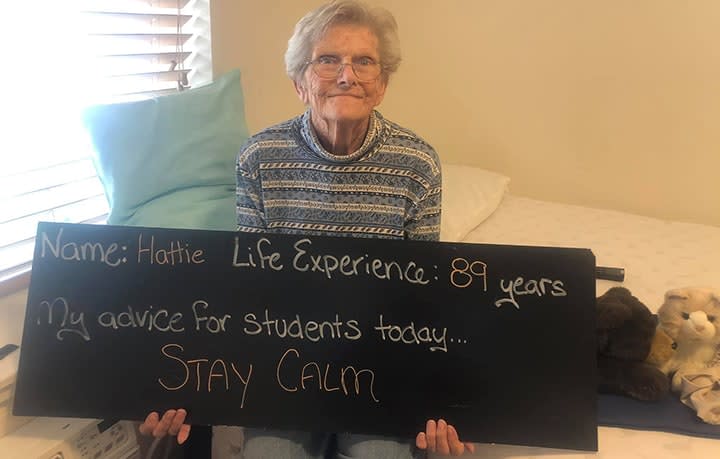
Receiving these messages of hope and encouragement helps lift the spirits of local schoolchildren and lets them know that their friends from the community are thinking of them. Sending these messages of encouragement helps our residents maintain relationships they have built with local students and continues to give them a greater sense of meaning and purpose in their daily lives.
We applaud the efforts of our wonderful staff members and caregivers as they continue to use their creativity to find fun and meaningful ways of engaging with our wonderful residents and the greater community that surrounds us!
Related Articles:
Most of us are aware of the many benefits of animal therapy, especially for those individuals challenged by dementia. Animals have always had a special way of connecting with and lifting the spirits of our memory care residents. But who would have thought that a pair of chickens would be able to have a similar impact? They are doing just that at Porter Place Memory Care in Tinley Park, Illinois. If you visit Porter Place, you will see the two resident hens, named “Coke” and “Pepsi”, strut proudly in their special, secure garden area. They even have custom made harnesses so that residents can “walk” the hens in one of several outdoor areas at Porter Place.
The hens of Porter Place are part of the Happy Hen Program, managed by the Porter Place life engagement team. The residents have enjoyed helping to build and decorate the chicken coop as well as install special fencing to keep the area secure. Residents even got involved in a hen-naming contest, giving the hens some fun, unique names to match their unique personalities.
While the Happy Hen Program brings a lot of smiles, it is also providing considerable therapeutic value for residents, who spend time feeding and caring for the animals as well as enjoying interacting with them.
“Most of us derive meaning and satisfaction from nurturing others, and memory impairment does not diminish that desire,” says Bobbi Kelley, Community Relations Director for Porter Place. “If anything, it becomes even more important. Coke and Pepsi have quickly become a vital part of daily life here,” she adds.
Below are a few photos of the Porter Place hens and residents enjoying them.
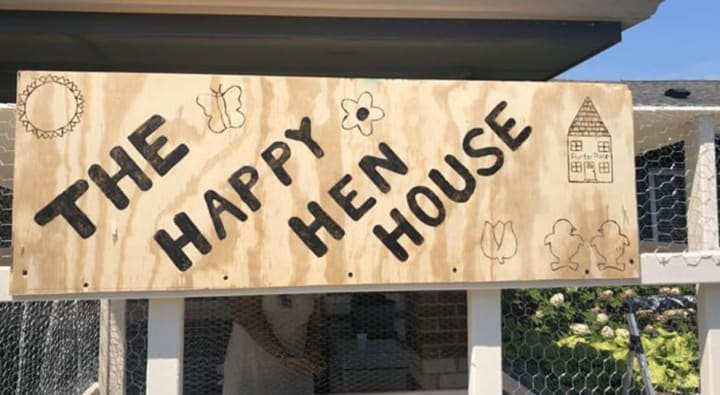
Staff and residents worked together to build and decorate the entrance to the coop.
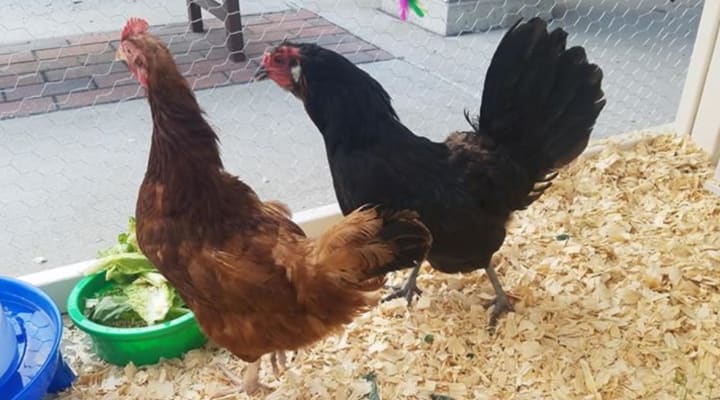
That’s Coke on the left and Pepsi on the right.
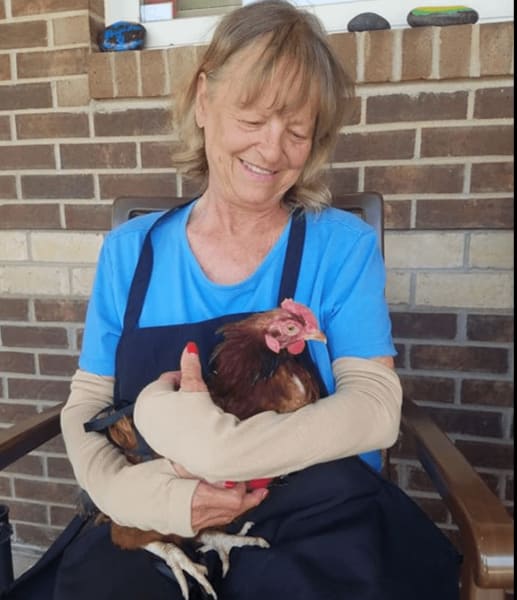
A resident wears special gloves to hold the hens. Her smile says it all!
The Happy Hen Program has been a huge success at Porter Place. And it has been a breath of fresh air for residents and staff dealing with all the many challenges surrounding the pandemic. Bobbi Kelley puts it best, “Our residents and their families really value our special life engagement programs because they provide purposeful interactions and a great amount of fun!”
Related Articles:
For a while there, we thought we had lost our baseball season. And few would be more disappointed than the residents of our memory care communities. Baseball, America’s oldest professional sport, represents so much more than a game. For millions of older Americans, baseball was a big part of growing up. Therefore, it holds many memories from their youth, some having played baseball with their friends in the neighborhood, others just enjoying going to games. Baseball hits upon many emotional touchpoints, especially for those with dementia who may struggle to recall recent events but can remember, with great gusto, their favorite baseball teams. So we, along with our residents, are very happy that it’s back!
At our Anthem Memory Care communities, we have been celebrating the return of baseball in many forms, from playing t-ball to watching baseball on TV to enjoying baseball themed performances.
Here are just a few photos of some of our residents celebrating the return of America’s sport!
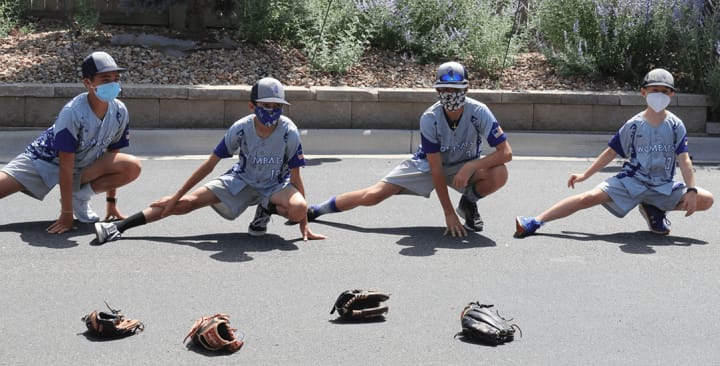
The residents of Chelsea Place Memory Care in Aurora, Colorado, were treated to a special opening day performance!

This resident of Chisholm Place Memory Care in Wichita, Kansas, is ready to go with banner and baseball favorite: Cracker Jacks!
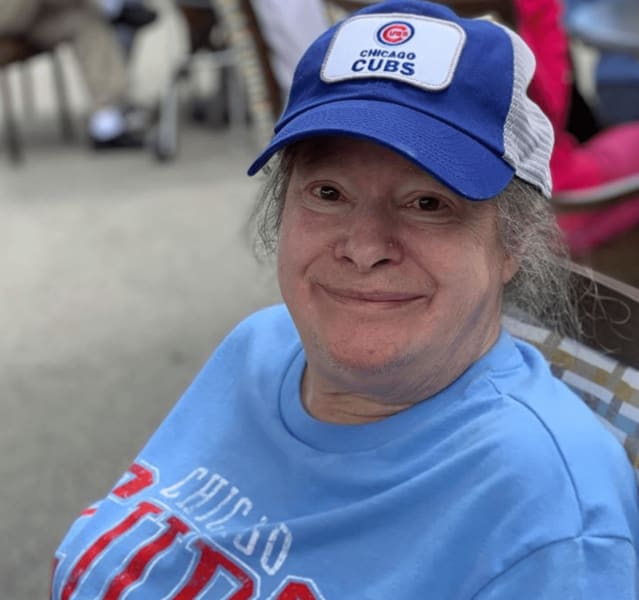
Little question as to whom this resident of Emerald Place Memory Care in Glenview, Illinois is rooting for!
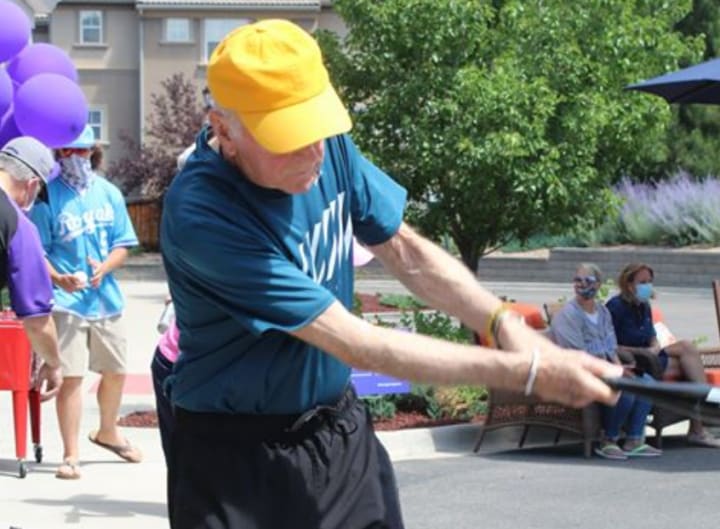
You can tell this resident of Chelsea Place Memory Care has played ball before. Nice swing!
For Americans with dementia, baseball brings a familiarity that is emotionally soothing. That is why we have found that so many of our residents respond positively when they listen to a game on the radio or watch it on TV. Hearing a rousing National Anthem followed by the words “Play ball!” rarely fails to bring a smile and a cheer.
If you are caring for a loved one with dementia, take some time out to watch a ball game with them. It’s a shared activity that connects us to each other in a unique and special way. And, especially in these times, that means a lot!)
(The cover image is of an enthusiastic resident of Chisholm Place Memory Care in Wichita, Kansas.)
Related Articles:
Did you ever have a pen pal? If you didn’t, chances are your parents or grandparents did at one time. For those born in the 1920’s, 30’s and 40’s having a pen pal was a popular way to get to know someone who may have lived across the country, or even oversease. It was fun to write and eagerly anticipate receiving a letter or postcard in return.
Fast forward to today’s environment and we see so many young people communicating via text and video chat. It’s nothing for them to pick up an iPhone and engage with a contemporary on the other side of the world. But for many older of those individuals who are feeling isolated, especially during this pandemic, having a pen pal provides a means of connecting to someone with whom they can share stories and experiences. This can be especially effective for individuals with dementia who often can recall past hobbies and passions more readily than recent events.
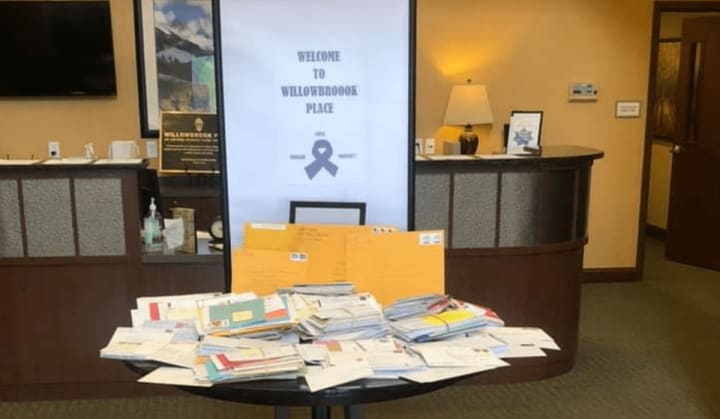
Recognizing this potential for individuals with dementia to build new, purposeful experiences, Willowbrook Place Memory Care our Anthem Memory Care community in Littleton, Colorado, started up their own pen pal program, reaching out into the greater community to those who might want to correspond with their residents. Each participating resident shared their personal interests and was matched with someone outside the community who shared some of their favorite hobbies and pastimes.
The response has been overwhelming! Once the program got started, Willowbrook started receiving hundreds of letters and cards each day from people who were eager to connect with their residents and learn more about their unique backgrounds and personal stories.
Staff members reported receiving an average of 300 letters per day!
And there are some beautiful stories. Willowbrook staff member recently noticed that one of their residents, Glenn (pictured below) who had loved to hike in his early years, had tears in his eyes while reading a letter from his pen pal, also a hiker. They asked him why. “They are tears of joy,” he responded. “This takes me back to my hiking days!”

Below are a few more images of some very special Willowbrook Place residents, holding placards to describe their perfect pen pals!


If you are caring for a loved one with dementia, consider finding them a pen pal. There are many pen pal programs available to connect seniors with like-minded individuals located in virtually all corners of the world.
You can help them put their letters together and, together, share the anticipation of receiving a response. As we all know, this pandemic has kept so many seniors isolated from their loved ones. Having a pen pal is a great way to lift the spirits and gain a renewed sense of connectedness; something needed now more than ever!
Related Articles:
As we continue to navigate carefully through this pandemic, Anthem Memory Care community leadership has been busy seeking safe and enjoyable ways to bring our residents together with their loved ones.
Socialization is so important for individuals with dementia and our communities have been doing a great job using technologies, like video chat, to connect our residents with family, hosting car parades, and facilitating “window visits” so that residents can safely see the faces of their loved ones up close.
We have also been carefully planning for the day when the weather warms up and we can bring families and residents together, CDC safety precautions intact, outside in our courtyards. And we’re happy to report that our communities are doing just that!
Grace Point Place Memory Care in Oak Lawn, Illinois is a great example of finding innovative ways to bring people together safely. They have created what they call their “Backyard Beach”, the purpose of which is to create a fun, beach-themed outdoor setting for residents and family to visit. One recent visit was covered by CBS Local in the video shown below:
We understand how challenging these times have been for loving family members and residents. The pandemic has reshaped the way we communicate, keeping so many older adults from much needed physical contact with their loved ones.
However, with creativity and attention to CDC guidelines, it is possible to bring us closer together again. We are so proud of our staff and all their hard work to make these backyard beach visits possible. They are true heroes and our residents and family members share in applauding their outstanding commitment to creating a safe and loving environment for our residents.
(The title image was taken from the CBS Local video filmed at Grace Point Place)
Related Articles:
One of the hardest parts of having a loved one with Alzheimer’s disease is feeling a sense of loss of that special individual and his or her place within the family. It can be painful to remember how mom used to love her books or how dad used to love his days out on the golf course or working on a project in the garage. Painful, because these treasured memories have a special value that can’t be replaced.
There may be ways, however, to recapture some of these memories and bring them back to life in new ways. It starts by learning to leave former expectations aside and shifting your mindset to acknowledge your loved one’s limitations. With a different outlook, you can find small ways to tap into some of those former skills and talents and, in the process, identify a new source of pleasure for your loved one and your family.
At Anthem Memory Care communities our staff members are always on the lookout for the former craftsmen, artists, bakers, music lovers and even the performers in our communities. Because we believe that, while each individual may only retain bits and pieces of what they used to do, those bits and pieces can bring true moments of joy to them, their families and our loving staff members.
With that in mind, we hope you enjoy these photos, sharing some of the wonderful talents of our Anthem Memory Care residents.

A lovely piece of mixed media art displayed by a resident of Greenridge Place Memory Care in Westminster, Colorado.
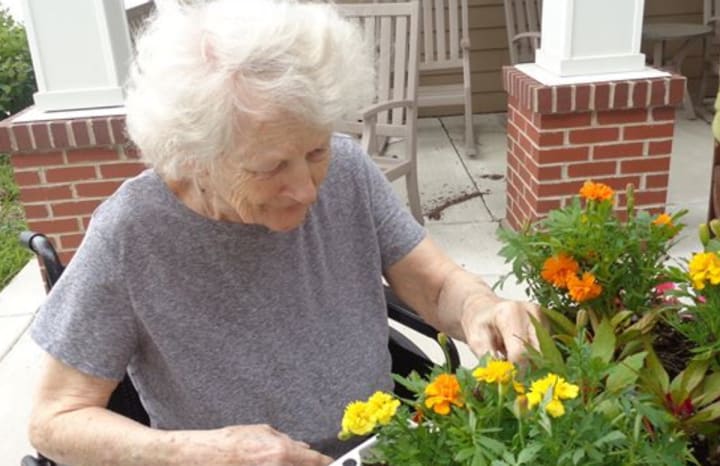
This resident of Grace Point Place Memory Care in Oak Lawn, Illiniois, couldn’t wait for Spring to get to her beautiful garden.
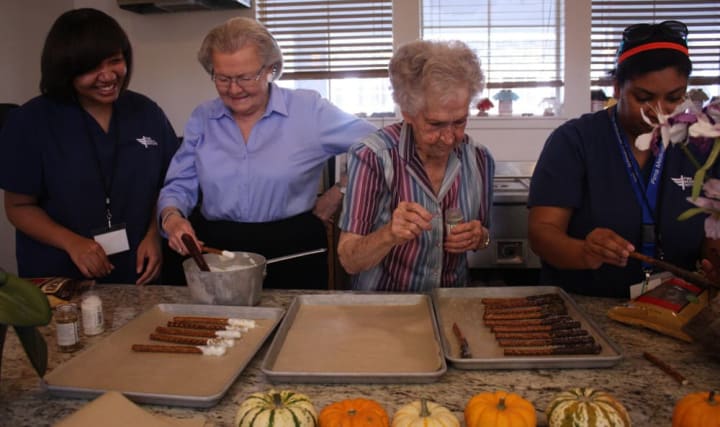
At Emerald Place Memory Care, in Glenview, Illinois, the kitchen comes alive when the resident chefs get involved.
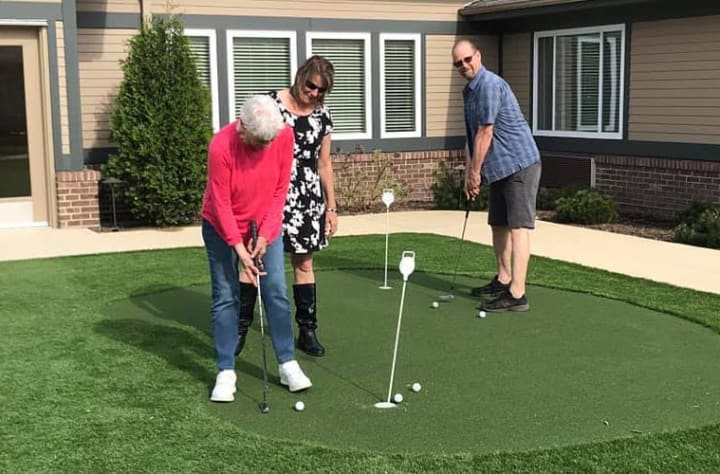
This resident of Harvester Place Memory Care in Burr Ridge, Illinois shows off her skills on the putting green.
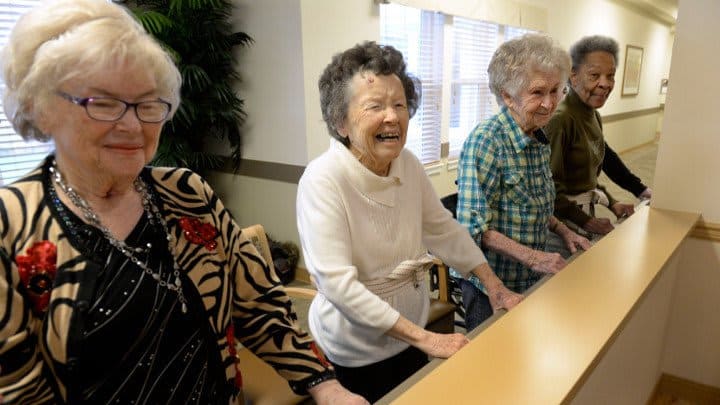
A former professional dancer holds dance class at the barre at Chelsea Place Memory Care in Aurora, Colorado.

At Willowbrook Place Memory Care in Littleton, Colorado, a resident makes magical music from the piano.
Do you have a loved one with dementia? What did he or she used to that brought delight to your family? What skills did they possess that your family relied upon?
Never give up trying to re-connect your loved one to the hobbies and talents they once had. While it will be a different kind of connection, with patience and love, you may be surprised at the moments of joy it will bring!
(The main image on this blog is of a resident of Harvester Place Memory Care in showing off her “from scratch” baking abilities!)
Related Articles:
If you’ve ever owned a dog, cat or other animal you know how soothing it can be to scratch its ears, pet it on the head, or run your fingers through its soft fur. A friendly dog at your side or a warm cat on your lap can do wonders to lift the spirits.
For those individuals with dementia, a friendly animal can have an even more pronounced impact, often connecting them to the world around them, where other methods fail. In fact, Dr. Edward Creagen, of the Mayo Clinic, once said that, “If pet ownership was a medication, it would be patented tomorrow.” Those are powerful words that certainly ring true for anyone who has experienced the positive impact of interacting with animals.
Certainly our Anthem Memory Care residents know the feeling of joy when they connect with animals. Below are just a few lovely photos taken over the last year that capture some wonderful moments of joy for our residents interacting with four legged friends.

A resident of Emerald Place Memory Care in Glenview, Illinois gets a kiss from a happy yuletide canine! (Taken over the holidays.)
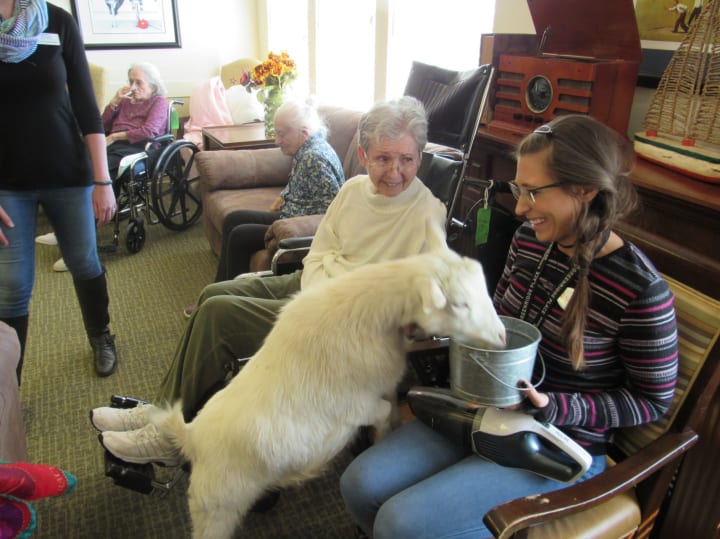
At Greenridge Place Memory Care in Westminster, Colorado, there's nothing more fun than feeding a hungry goat!

Cats rule at Highline Place Memory Care in Littleton, Colorado.

Dogs certainly get spoiled at Morningside Place Memory Care in Overland Park, Kansas (taken on an outing early this year).
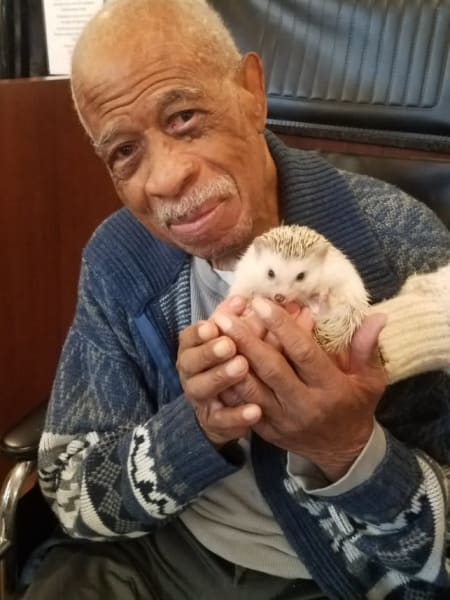
Happiness is holding a hedgehog at Porter Place Memory Care in Tinley Park, Illinois!

Residents can't get enough of Amos the resident puppy at Willowbrook Place Memory Care in Littleton, Colorado!
At Anthem Memory Care communities we know how pet visits improve the wellbeing of our residents and our staff members. That is why we constantly seek ways, especially during this pandemic, to bring our animal friends in for visits.
Karin Winegar, author of the book, Saved: Rescued Animals and the Lives They Transform, says it best. “The human-animal bond bypasses the intellect and goes straight to the heart and emotions and nurtures us in ways that nothing else can.” We couldn't agree more!
(The cover image on this blog is that of a resident of Chisholm Place Memory Care in Wichita, Kansas, with the community cat.)
Related Articles: