
Most of us will readily acknowlege the power of music in our lives. While our individual tastes may differ, we have our favorite songs and delight to the memories they bring back to us. For individuals with dementia, music takes on added importance. This is often because music has the power to connect to those with dementia in ways that other sensory experiences may not.
According to the Alzheimer’s Association, studies show that music can lessen behavioral issues and even reduce levels of agitation, common among those struggling with dementia. This is true even as the disease enters later stages. While an individual may forget the identity of the person sitting next to them, they may still be able to tap their feet to a song they recall from their youth. Music can continue to communicate to us, even when verbal communication has become difficult.
What does this mean for family caregivers of loved ones with dementia? It means that there may be ways to engage and connect through music when your words can no longer reach them. Here are some tips to harness the power of music and use it in a positive way, giving it every chance of breaking through to your loved one:
The natural connection to music is powerful, even in later stages of dementia. As the Alzheimer’s Organization notes, Ashley Campbell, widow of country music legend, Glen Campbell, was able to stay connected with her husband through his music until the very end of his life. Music was such a major part of their lives and both of them found solace in the familiarity of sharing that music with each other and those around them. You can too!
Porter Place Memory Care is proud to announce that they have been selected as one of 2020 Best of Senior Living Award winners. SeniorAdvisor.com, the largest ratings and reviews site for senior care and services in North America and Canada, provided this same award to Porter Place in 2017, 2018 and 2019.
The Best of 2020 Award is based on the online reviews written by seniors and their families. This exclusive designation honors the top two to three percent of senior care providers across the United States and Canada, by tabulating over 240,000 family-created reviews to find the highest quality care providers for this honor and prestigious award.
Enough can’t be said for the positive impact that a sense of purpose makes on individuals challenged with dementia. The same can be said for interactions with animals. So imagine the impact of putting the two together: doing purposeful, community service work for animals.
The residents of Chelsea Place Memory Care in Aurora, Colorado were delighted to participate in a project to serve the local dog parks. The project involved building what are referred to as “dog stick libraries” – crates built to hold sticks, tennis balls and other dog toys.
Local students from Regis Jesuit High School got together with Chelsea Place residents to saw, hammer, nail and build the crates. The crates were then sent to local dog parks around the area. This unique program helps young people learn more about dementia and gives them a valuable opportunity to interact in a positive, constructive way with them. And, while a few of the students worked with wood before, many had not. But all enjoyed the process, learning to work together and gaining the benefit of feeling they had accomplished something very special.
The program caught the attention of local news outlets, including the Denver Post who sent out a reporter to interview the students, residents and staff. Jenni Dill, Life Engagement Director for Chelsea Place explained to the reporter how the process helps students learn how to get into a different sort of reality that accompanies dementia. “One of the things the girls learn is wherever someone’s at in their reality, you just join them. So if he thinks he lives on the moon then, hey, we’re getting on the rocket ship. That’s just the way it goes,” she said.
And, as is so often the case when students get together with seniors, the students came away from the experience having learned a few things about word working from some of the residents who had worked with wood before. “If I’m being honest, the first day I had to remember these people have dementia but, now, I can honestly say I forget it half the time,” Juliette Bruner told the Denver Post.
Related Articles:
Students from a local high school joined with Chelsea Place Memory Care residents to build special “dog stick” libraries with wooden crates to distribute to dog parks throughout Aurora, Colorado. Their crate building session was written up in the Denver Post. You can read more on this here
The holidays are over. If you are caring for a loved one with dementia, it’s back to the reality of a long winter ahead, and the concerns that revolve around the responsibilities you shoulder every day. The amount of stress you carry with those responsibilities cannot be overstated. Stress is in all our lives but, for caregivers, it can seem endless and without help in sight.
The Alzheimer’s Association identifies the 10 symptoms of caregiver stress as follows:
Collectively, these symptoms can knock an otherwise caring, compassionate caregiver off balance, replacing what was once a level-headed approach to daily life with one that is full of daily anxiety.
If you recognize some of the above stress patterns in your life, it is important to know that there are ways to manage your stress before it becomes overwhelming. Here are some tips to gain back control:
The stress you feel as a caregiver is very real and must be taken seriously. Pushing your feelings aside and neglecting your own needs doesn’t do anyone any good. Take the time now to take steps to gain control over your life and your role as caregiver. Remember, there are resources out there to help. Do this for yourself and do it for your loved one.
We have often written about the value of providing a sense of purpose to individuals struggling with dementia. When that sense of purpose extends out to the greater community, it has an even more powerful impact on all who are involved.
Over the holidays, the residents of Porter Place Memory Care in Tinley Pak, Illinois decided to embark upon a very special project to benefit P.A.W.S of Tinley Park, a no-kill animal shelter dedicated to the protection of domestic animals and to the attempt to prevent animal cruelty in the surrounding communities.
Anything involving an effort to help animals tends to get a particularly enthusiastic response. Porter Place residents and staff considered a variety of ways to raise money for the shelter. Finally, they came up with a great idea: make their own special organic dog treats. Everyone loved it! The popular gourmet treats sold out quickly to dog owners and lovers throughout the community.
The fundraiser itself was a big success, garnering $268 for P.A.W.S.; a donation that will go a long way towards helping house and feed shelter animals, especially during the cold months of winter. P.A.W.S. Director, Jane Kocek, visited the community residents to personally thank them for their hard work and generous donation. Bobbi Kelley, Porter Place Community Relations Director, made note of the importance to the residents of participating in the project as well as the donation. “It’s very important that all of our residents have the opportunity to help others and contribute to society,” she said. “We all need purpose!”
Taking part in activities that provide a greater good to the broader community creates a sense of purpose in all of us, especially aging adults who are challenged with a dementia, such as Alzheimer’s disease. It adds meaning to their lives and provides the social interaction that is so important for their physical and emotional wellbeing.
If you are caring for a loved one with dementia, try to find stimulating, purposeful activities for them to participate in. You can either do this at home or find a local memory care community and get involved. Anthem Memory Care communities regularly open our doors to the public and would welcome an opportunity to meet you and your loved one!
Related Articles:
When the new year is “2020” it brings up all sorts of interesting connotations; perfect vision being among them. With that theme in mind, what is your vision as a caregiver for 2020? Just an extension of 2019? Another year of more giving and less taking for yourself? While that may seem heroic, it can wear you down to a point where you are no longer effective as a caregiver, let alone be the healthy person you owe it to yourself to be. This is especially true when you are caring for a loved one with dementia. That is why it is so important for caregivers to attend to their own needs, as well as those of the loved one they are caring for. And it’s not always easy!
Here is a short checklist compiled from a variety of sources, including our own. While you may not be able to tackle all of these at once, you should try your best to get started on at least a few of them:
It takes time and plenty of restarts to get on track with anything new. So don’t chastise yourself when you miss a support group meeting or have some gaps in your journaling. You are human and perfection should not be your goal.
Instead, what you should focus your attention on is finding ways to create a healthier, stronger and happier “you” in 2020. That takes time and patience. So make sure you are surrounding yourself with positive people who can be supportive on this most challenging of journeys.
Your life as a caregiver can’t be boiled down to a simple checklist. But, as with the old Chinese proverb of “A journey of a thousand miles begins with a single step”, the new year is a great time to start something fresh. Do this for yourself. Your loved one will benefit as well.
Related Articles:
Well, we’re well into the holiday season! This is the time of year when families and friends gather to celebrate Christmas and Hanukkah traditions. It is the time when people come together to help others who are less fortunate. Finally, it is the season when everyone wishes each other the very best in the upcoming new year. As a special treat, we thought we’d share some images from just a few of our Anthem Memory Care communities as both residents and staff come together to make this season special for everyone!
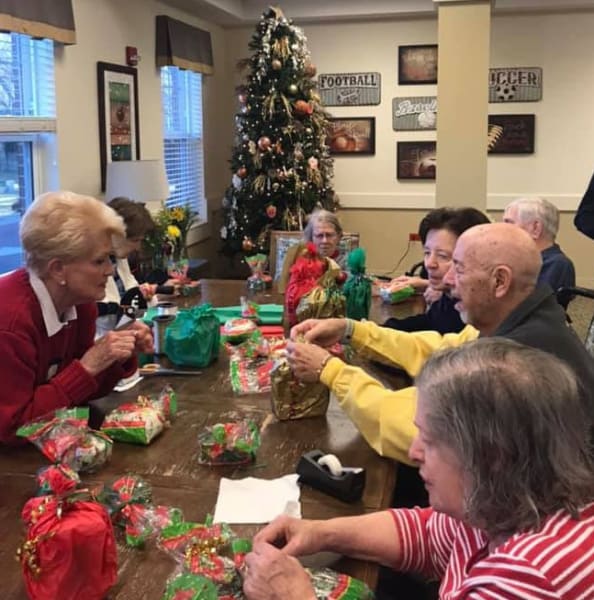
Emerald Place residents did a great job making goody bags for charity...

Grace Point Place residents worked together to create a beautifully decorated tree...

A local elementary school choir performed holiday carols for residents at Highline Place...
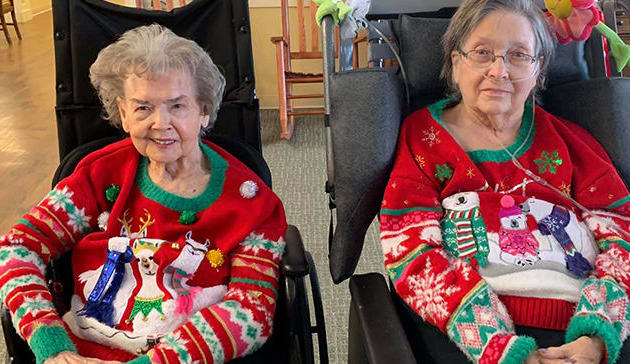
Willowbrook Place residents show off their Christmas sweaters...

The talented culinary staff at Chelsea Place created a host of tasty goodies for the residents, including this traditional yule log...
Wishing all of you and your families happy holidays from all of us at Anthem Memory Care communities.
Related Articles:
For those who celebrate Christmas, the holidays can be full of fun family activities. Many of them are traditions; things you’ve always done and enjoy doing year after year. It may be as simple as decorating your tree or putting up lights and other decorations. Perhaps it’s taking a stroll in the snow while enjoying the cold, crisp air.
Regardless of how you have traditionally celebrated the holidays, when a loved one has dementia you may soon discover that the things they did last year may now be too strenuous or require too much cognitive ability to do this year. Needless to say, that can be a difficult realization to handle.
It doesn’t, however, mean you can’t still enjoy the holidays and engage in meaningful activities as a family.
Becoming more cognizant of how your loved one’s abilities have changed will help you adjust old activities or discover new ones that are less taxing and yet also enjoyable. Here are some things to consider as we approach Christmas week:
If you’re having trouble coming up with ideas, you can visit the Alzheimer’s Association website, which has plenty of ideas and activities geared towards individuals with dementia.
Above all, try not to expect too much of yourself or your loved one as you substitute new activities for old familiar ones. If an activity is clearly not enjoyable, don’t persist. Let your loved one’s behavior be your guide. Switch to another activity or take some time out to rest. Taking it slowly will enable both you and your loved one to discover some new activities that can be just as enjoyable and memorable as the old ones.
Danyanique Hughes, Life Engagement Director for Harvester Place Memory Care in Burr Ridge, Illinois, was doing some online research recently and came across some information about Northern Illinois Food Bank and their programs to feed those in need in the Northern Illinois area. The Northern Illinois Food Bank is a non-profit group whose goal is to help solve hunger throughout an entire 13 county service area. They are proud member of Feeding America and are the source of nutritious food, innovative feeding programs and hope for over 500,000 people every year.
Danyanique was impressed with what she read about the food bank organization and asked if the residents of Harvester Place could lend a hand. They could indeed! After a bit of planning, a group of residents headed out to the Food Bank warehouse and got to work. Their job was to prepare food products by removing the bar codes and sorting and pack them into boxes so that they could be distributed to families in need.
Theresa Kenaga, Community Relations Director, noted how the residents enjoyed getting out of their familiar environment and out in the broader community. She was also impressed with the level of involvement by community residents. “Residents felt a strong sense of purpose and commented that it was good ‘to get out to work’,” she said.
Socialization is very important for aging individuals, as is establishing a sense of purpose. Studies have shown that aging individuals, when experiencing a sense of purposefulness, feel better both physically and emotionally. It can also have a positive cognitive impact. Engaging in a purposeful activity can help stimulate the brain; something very important for those with dementia.
The Harvester Place staff enjoyed engaging with residents as they packaged the food items and experienced their own sense of purpose in helping the residents help to feed the hungry. While this is the first time they have participated, it won’t be their last. The staff and residents of Harvester Place plan to stay involved with the Northern Illinois Food Bank, hoping to participate quarterly, or even monthly, if possible.
The photo shows the following individuals, from left to right: RuthAnn Green, Alexis Alvarado, Grace Doerk, Suzanne Gasperini, Danyanique Hughes, Billie Sklair, Mario DeMeo, Carole Considine (Harvester Place Executive Director), Normal Jaffe, Frances Franci. Seated is Manda Klancir.
By nature, those who care for loved ones tend to be known as “givers”. They are constantly putting their own needs last on the list while they devote time, energy and love to serving a beloved family member or friend. Caregivers of individuals with dementia have an added layer of challenges as they strive to take care of a loved one, often an aging parent, while juggling all kinds of additional responsibilities and other commitments, including work and family obligations.
We hear from many family caregivers who tell us they simply can’t remember the last time they had a break from the day to day responsibilities of caring for a loved one with Alzheimer’s disease, or other dementia. For many, it has become a 24/7, 365-day commitment, a lifestyle devoid of “down time” let alone a weekend out of town or vacation.
If this description fits you, maybe this should be the holiday season when you give yourself the gift of time; time to do those things that you have been neglecting over the past months, or even years. You can do this by scheduling some “respite” time for your loved one at a local memory care community. An ideal length of time for respite is a few weeks or more. This allows you to shift gears and start going about the business of caring for the caregiver; in this case, you.
Here are some key benefits of respite care that you should know about:
This last point is an important one. Not all memory care communities are the same, nor are their respite programs. Remember that respite should be a meaningful experience for your loved one, not just a holding tank while you are away. Therefore, be sure to evaluate all your potential respite sources. Ask questions. Find out what activities your loved one will be included in. Be prepared to say “no” if you don’t get the answers you’re looking for.
Family caregivers who utilize our communities’ respite care services often tell us that the break has left them with a renewed sense of purpose and has given them the time they need to recharge and gain back some peace of mind that had eroded over time. They also report that their relationships with friends and family members have improved as they have been able to reconnect with those they had lost touch with.
If you are caring for someone with dementia, now is a good time to organize some time off. Why not schedule a few weeks after the holidays? Make 2020 the year that you give yourself the gift of time. It may be the most important gift that you and your loved one will receive.
Related Articles:
What are you thankful for? Thanksgiving is the time of year when we stop to think about, not what we don’t have, but what we do have in life. For some it may just be having a roof over your head. For others, it’s having the love of a husband or wife, or a loyal friend. The very act of feeling gratefulness can be transformational. Perhaps that’s why for so many people, Thanksgiving is their favorite holiday. It’s a time to reflect and give thanks for big and small blessings
For caregivers, there are days when finding things to be thankful for can require a great deal of effort. After all, the daily challenges caregivers face are unique and nobody can truly understand the anxiety, stress and grief you face each day and must find ways to overcome.
And, yet, finding something to be thankful for can have a therapeutic impact that is hard to quantify and yet is very real. Studies have shown the act of feeling thankful can improve sleep, strengthen relationships and even help keep depression at bay. With that in mind, below are a few recommendations from professional therapists and other family caregivers to help you tune into a more “thankful” side of your daily life.
You may be surprised that by finding people, things and moments to be thankful for, it can bring some light into otherwise difficult, challenging days. Make sure, too, that you identify external sources that can be of help to you. Dementia support groups and respite care are two excellent ways caregivers can give back to themselves.
Thanksgiving is a time to reflect on the positive things and people in your life. And, while it may take some time and effort to identify it, there is always something to be thankful for. Take the time to find it, and share it with those you love.
Happy Thanksgiving.
Related Articles:
If you are caring for a loved one with Alzheimer’s disease, you know that, at times, nothing feels more isolating. Nobody truly understands the very special and challenging world in which you are living. Nobody understands those sleepless nights and how hard it is to get out of bed each morning. Nobody, that is, except perhaps another caregiver with a loved one who has Alzheimer’s disease.
That is why, as a caregiver, you need to connect with other caregivers. You need to be able to share your deepest fears and worst moments with those who intuitively understand. That’s what dementia support groups were created to do. They connect caregivers to each other; all in a supportive environment, facilitated by licensed professionals who know how to ensure that the needs of all participants are met.
Here are just a few of the benefits that a support group brings to family caregivers:
Finally, attending a dementia support group gets you out of your house and away from your day to day routine. It gives you something to look forward to, especially when you’ve had a tough week, knowing that you will have an hour or two to debrief, relax and form new, supportive relationships. Attending a support group represents a commitment to yourself to do something for yourself.
Our Anthem Memory Care communities hold regular dementia support groups. Take time to find one near you.
Every caregiver’s journey is unique. The path you travel will be different from anyone else’s. Finding a good dementia support group is the first step towards lighting that path ahead.
When the late fall to early winter chill sets in, most of us bundle up and move on. We understand that we will eventually reach our destinations and find ways to warm up. We may complain about the weather, but we accept it and modify our clothing and commutes to account for it.
When an individual has dementia, however, they may not recognize the weather changes in ways that those with normal cognitive ability do. While they may feel cold, they may lack the organization skills to find a sweater or jacket, let alone put it on. They may not remember where the thermostat is. Or they may resort to unsafe ways of warming up, such as turning on the oven burners or stove.
As the weather becomes colder, it is important for those caring for loved ones with Alzheimer’s disease or other forms of dementia to be especially aware of the potential harm weather swings can bring.
Here are some things family caregivers should be on the lookout for and ways to keep your loved ones safe and comfortable as wintery weather ushers in.
Changing seasons and the weather that accompanies them are but a passing concern for most of us. However, it is important for caregivers to realize the discomfort and confusion that weather changes can bring to loved ones struggling with dementia. By taking the time to plan properly and prepare your loved one, both inside and outside the home, you can help avoid potential issues and hazards.
Winter weather can be a refreshing change and bring a festive touch as we approach the holidays. Make sure you are doing everything you can to keep your loved one with dementia comfortable and safe. It will make for a more enjoyable season for all of you!
Related Articles:
Every year, since 1983, we’ve been recognizing November as Alzheimer’s Awareness Month. The idea behind it is to spread awareness of Alzheimer’s and to spotlight research aimed at finding a cure. Since 1983, the number of individuals living with Alzheimer’s disease has nearly tripled. So acknowledging and continuing research efforts is more important than ever. Here are a few facts about Alzheimer’s disease, courtesy of the Alzheimer’s Association:
Perhaps you have participated in one of thousands of fundraising activities held across the country to support the Alzheimer’s Association. Involvement in these organizations is important to keep the forward momentum going and keep research on the cutting edge. Here are some things you can do to get more involved in supporting the fight for the cure, not only in November, but throughout the year.
A great place to learn more about Alzheimer’s disease and get insight as well as support, is by visiting the Anthem Memory Care blog site. We cover a wide range of topics, from aging, to health to emotional strategies for coping with a loved one struggling with dementia. You can access the blog on our home page. Just scroll down to find the blogs.
At Anthem Memory Care communities, we believe in bringing awareness of Alzheimer’s disease every month of the year. Only by organizing and working together, can we make the progress necessary to forever putting an end to this devastating and debilitating disease.
Related Articles: