
More so today than ever before, health and safety are on the minds of families of individuals transitioning into a senior care community. And, with good reason, especially in the wake of the pandemic. Families want assurance that the community leadership and all those working within the community are vigilant in adhering to best practices and are consistently striving to achieve a high standard of performance as it relates to the living conditions and safety of their environment.
At Anthem Memory Care, we take the wellbeing of everyone who lives and works within our communities very seriously. Our environments are specifically designed to facilitate the highest standards of health, safety and compassionate care for those we serve.
That is why we are proud to be the first stand-alone memory care network of communities to achieve the WELL Health-Safety Rating from the IWBI (International WELL Building Institute).
The process of applying for this designation is not trivial and requires collaboration and teamwork, along with leaders who not only understand the importance of a healthy environment but embrace the work and dedication it takes to sustain that level of commitment.
As Lewis McCoy, Anthem Memory Care Chief Operating Officer, told McKnight’s Senior Living, “Demonstrating our care and concern for not only residents, families, guests and employees is a critical component of the value proposition of living and working at an Anthem Memory Care community. The WELL Health-Safety rating allows us an opportunity to highlight the policies, processes, systems and tools for maintaining a healthy and safe place for individuals to live and work.”
We invite you to learn more Anthem Memory Care’s dedication to health and safety and about our mission to “protect, engage and love” our residents. Feel free to contact us or reach out to a community near you and experience the difference our amazing team is making in the lives of our residents.
(Our header image shows a resident of Grace Point Place Memory Care in Oak Lawn, Illinois, holding up a special card made by a local elementary school student!)
She was a golfer before she became a memory care community resident. Why should she stop now?
That has always been our philosophy at our Anthem Memory Care communities. Residents, families, and staff take great joy in celebrating the amazing lives of those who live and work inside their communities. That includes sharing a genuine respect and admiration for their lifelong achievements and talents.
Ruth Lang, a golfer and resident of Grace Point Place Memory Care in Oak Lawn, Illinois recently shared some pointers with a group of visiting students from AERO Special Education Cooperative. Chatting with the students on the Grace Point putting green, her love of golf and enthusiasm quickly became contagious as Ruth gave pointers and encouragement to the young golfers.
Tapping into early memories and skills can bring shared moments of joy.
These kinds of connections are so important, especially for those living dementia. We know that, while dementia impacts the ability to recall everyday events and people, earlier memories and skills enjoyed in their younger years can often remain intact.
That is why opportunities that tap into earlier memories so often bring shared moments of enjoyment, not only for the individual but to family and friends around them.
Inter-generational programs benefit everyone in more ways than we might think.
Ruth Lang’s golf tip session caught the attention of the local Oak Lawn newspaper, The Reporter. When asked about the event by the reporter, Shannon Dahlman, community relations director for Grace Point Place remarked, “Many of our seniors are lifelong golfers and fans. Our residents reminisced and schared their love of the game with a new generation of golfers and made new friends.”
When older adults are able to get together with young people, amazing connections are made which bring significant benefits to both groups. We regularly observe the increased energy and improved cognition of our residents when young people visit. We also can’t help but notice the genuine interest sparked in our young visitors, many of whom rarely are able to interact with older individuals. Whether it’s a few words of wisdom or sharing a funny story, these connections are real and meaningful to all.
Families of individuals living with dementia should be encouraged to find opportunities for their loved ones to engage with young people as often as possible. It won’t be long before you are able to witness the benefits for yourself.
Related Articles:
All of us have an “inner voice”. It’s that internal narration on everything we’re doing, thinking, and feeling, moment by moment. That voice in our heads is often referred to as “self-talk” and it is powerful because it can be uplifting or anxiety producing, depending on what messages we give ourselves at any given time.
For those who are caring for a loved one diagnosed with dementia, self-talk takes on a role unlike any other. It can fill a caregiver with guilt, grief, and hopelessness. And caregivers can be especially brutal on themselves with self-talk messages like “I’m failing mom/dad”, “I’m the worst caregiver that ever lived”, “Who was I to think I could deal with this?”
That’s certainly understandable in that the challenges of caregivers can be overwhelming and exhausting, both physically and emotionally.
However, if you are a caregiver, you need to know that an ongoing negative internal dialogue can do real damage to your health.
What if you could turn some of that negative self-talk into a more positive narrative? What if you could catch yourself mid-thought and find ways to disconnect with the negative thought and replace it with self-talk that is more uplifting and positive?
Is it challenging to do so? Of course! However, as with any new habit, it can be learned and used to help you navigate through more difficult days. Here are some tips we’ve collected from a variety of sources to bring more positive self-talk into your day:
Of course, replacing negative self-talk with positive messaging takes time. You will find there are days when this is more difficult. That’s why it’s important to reach out to trusted family members and friends and include them in your journey towards better self-care and self-messaging.
We also welcome you to participate in any of our dementia support groups. Contact the Anthem Memory Care community near you. We can provide a supportive environment for you to share your thoughts and concerns with other family caregivers, all in a safe, supportive program format led by licensed therapists who specialize
One thing we all love about summer is that it brings with its warmer weather lots of opportunities for outdoor activities and events. At Highline Place Memory Care in Littleton, Colorado, residents, family members and staff partnered with the local Challenge Foundation to host what they billed as an “old-fashioned picnic in the park”.
What made this event special was not just the lovely park setting, but the eighth-grade students invited to participate. Highline Place partnered with The Challenge Foundation, a group that works to give a leg-up to underserved, disadvantaged young people and help them achieve success through better education and opportunities.
Engaging in inter-generational activities is good for everyone, young and old. Individuals living with dementia, however, often benefit even more from these connections. Young people have a way of reaching out and connecting in a refreshing way that adults are not always able to do.
A new study cited by the National Center for Biotechnology Information corroborated earlier similar studies examining the benefits of inter-generational programs for individuals living with dementia. The study, reported that “The results suggest that residents with dementia who participated in IPs (Intergenerational Programs) had increased pleasure levels and reduced behavioral disengagement.”
Throughout our Anthem Memory Care communities, we regularly witness, firsthand, the many benefits when our residents engage in meaningful activities with young people. And what makes these interactions even more worthwhile is when those benefits are shared by the young people themselves. The recent Highline Place picnic is a great example of this. It brought along with all the fun an opportunity for students from underserved communities to enjoy meaningful interactions with adults. They spent much of the time sharing stories and experiences, which is something everyone enjoys.
Jodi Cornman, senior community relations director for Highline Place, was interviewed by local press regarding the event. Her words say it best, “Many of our residents spent their childhood summers playing outdoor games. This was a chance for our seniors to show today’s kids how to have an old-fashioned and unplugged summer. We hope new friendships will result from their time together.”
Residents, family and staff members of Highline Place Memory Care recently hosted what was billed as an “old-fashioned picnic in the park” recently. What made it even more special was the group of young people invited to join in the fun, eighth graders who are part of the Challenge Foundation which helps students break the cycle of poverty through educational opportunities.
The event was covered by MyPrimeTimeNews.com. You can read the full article here.
We often hear from family members of loved ones newly diagnosed with Alzheimer’s disease seeking their next steps. They will ask us, “What do we do now?”
It's a good question. And if this is your situation, it is important to first understand that your feelings are normal. Secondly, know that you are not alone. You have suddenly been thrust into a world you may know little to nothing of. So, you can’t be expected to deal with it all alone.
That is why our Anthem Memory Care communities host regular dementia support groups. Why are they so important? How do they benefit new family caregivers? Here are three key ways in which they can help:
Making the move to join a dementia support group is an important commitment to yourself. It is a reason to get out of the house and take a break from all your other commitments, knowing that this is your time to meet your own emotional needs.
The next move is yours. We urge you to take it by contacting an Anthem Memory Care community near you and arrange to attend the next support group. Do it for your loved one, do it for your family and, most importantly, do it for yourself.
Willowbrook Place Memory Care (an Anthem community) in Littleton, Colorado has been busy this month honoring the many “stars” who live and work inside their vibrant community.
It is a great opportunity to recognize the significant contributions made by dedicated staff members as well as the unique personalities of the amazing residents who make Willowbrook such a special place to live and visit.
We’d like to share just a few images of the many Stars who are lighting up the hallways and all the wonderful gathering areas at Willowbrook Place. Each Star has his or her unique story and took a moment to pose for a quick camera snap before going on with their day.
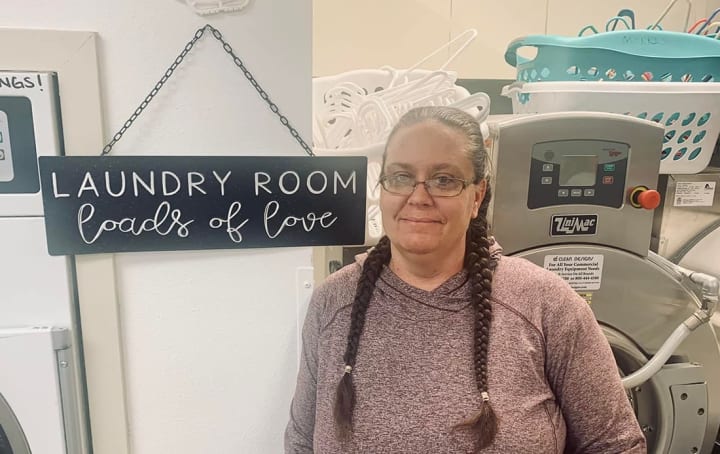
Meet “Star” Candy, who runs the laundry at Willowbrook. Clean, fresh clothing and linens make everyone look and feel great.
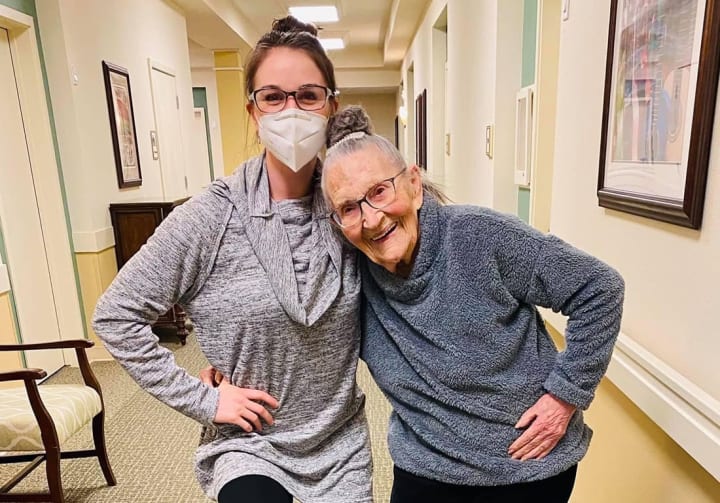
Yvonne, a “Star” Willowbrook resident (on the right) lights up the room with her smile and brings the energy levels up with her love of music and dance.
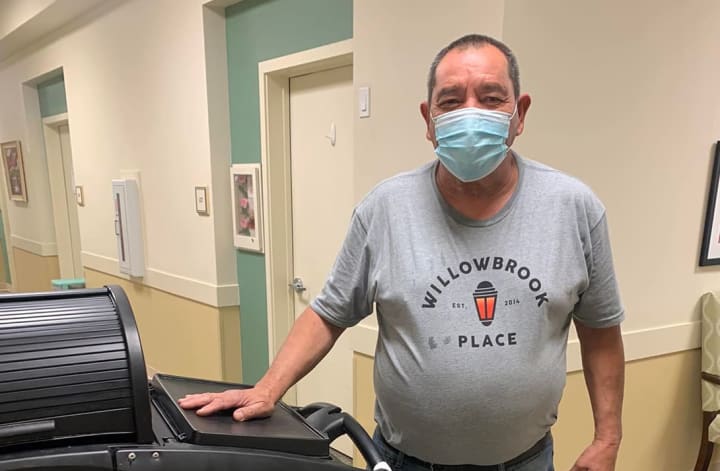
Meet Willowbrook’s maintenance “Star”, Miguel, always ready with a quick smile, who works hard to keep the community sparkling.
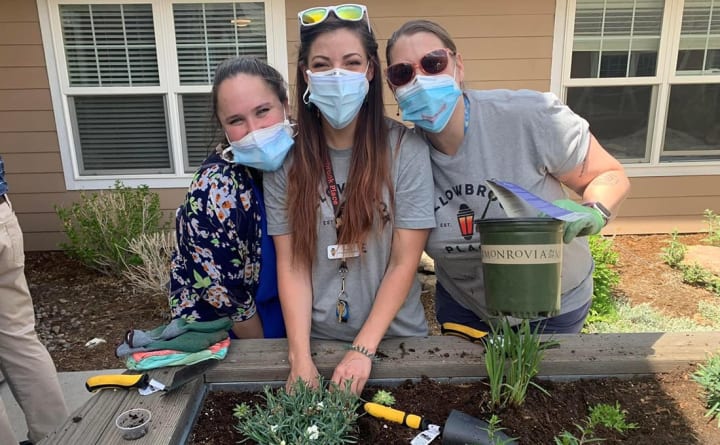
One of the most popular activities at Willowbrook is Katies Kraft Korner, run by “Star” Katie, one of Willowbrook’s creative activities assistants. There seems to be no limit to her imagination and love of encouraging residents to use theirs as well.
All our Anthem Memory Care communities are populated by “Stars”. Our staff members are not only highly trained in the field of memory care but are also chosen for their passion to serve individuals living with dementia.
If you have a loved one who has been diagnosed with Alzheimer’s disease or another dementia, we urge you to come and visit the Anthem Memory Care community near you and experience for yourself our dedication to protect, engage and love our amazing residents!
(Our top image shows “Star” residents, Mama B (left) and bestie, Pat, who love their daily walks outdoors together. Even their families are friends!)
Related Articles:
Ruth Lang, a golfer and resident of Grace Point Place Memory Care shared some pointers with a group of visiting students recently. Chatting with the students on the Grace Point putting green, her love of golf and enthusiasm was contagious!
These special moments were captured by local newspaper, The Reporter. You can read the full article here:
No one likes the thought of an aging parent being lonely. Even more concerning is when that parent lives alone and may go for days without any significant human interaction.
Social isolation and loneliness among older adults is more common than you might think. A National Academies of Sciences, Engineering and Medicine (NASEM) report found that almost a quarter of adults over the age of 65 are “socially isolated”.
Of course, when dementia is an added factor, the impact from social isolation can be even more pronounced. Many of the issues are physical as well as emotional.
The Centers for Disease Control (CDC) cites various studies which help explain the serious impact of prolonged loneliness on older adults as follows:
How can these risks be lessened?
The importance of social interactions cannot be overstated. Numerous studies point to the advantages of person-centered care for individuals living with dementia. Dr Douglas Brown, director of research and development of U.K.’s Alzheimer’s Society, collaborated on one such study. In a Healthline article Dr. Brown stated that, “A person-centered approach takes into account each individual’s unique qualities, abilities, interests, preferences, and needs. This study shows that training to provide this type of individualized care, activities, and social interactions can have a significant impact on the well-being of people living with dementia in care homes.”
This is one of the reasons that we take very seriously the training, experience, and genuine compassion of those we bring into our communities to care for our valued residents at our Anthem Memory Care communities.
If you are caring for a loved one who has been diagnosed with dementia, it is important for them to have human interactions throughout the day, ideally with more than one person, to help stimulate their brains and keep them as connected to those around them as possible.
While you may be able to achieve this through an in-home living arrangement for the time being, the time may come when your loved one will benefit more from an environment built to serve the unique needs of those with dementia.
We welcome you to reach out to any of our communities in advance of making that decision. Feel free to check out our resources page as well. We’re here to help!
At our Anthem Memory Care communities, giving back is part of our daily lives. Our residents and staff are always seeking ways to channel their energies and creativity to help those in need and to give thanks to those who provide needed services within the greater community.
Recently, in an effort to help stem food insecurity in local shelters, residents, staff and families of Grace Point Place Memory Care initiated a project to put together special “blessing boxes” filled with non-perishable goods. The boxes were gifted to First United Methodist Church in Oak Lawn for their mini-pantry program. Everybody chipped in to help. And everyone benefitted from the project.
The process of engaging in a purposeful activity that helps others has a therapeutic power all its own. You may be familiar with the Rush University study back in 1997, still considered the hallmark in connecting purposeful activities with better brain health.
The study monitored the activities of over one thousand older individuals. They found that there was a 30% less cognitive decline among the seniors engaging in more purposeful activities and who exhibited a higher sense of well-being than others.
So, helping others really is a great way to help oneself!
The Grace Point Place “blessing box” project even caught the attention of The Chicago Tribune. A reporter asked Shannon Dahlman, community relations director for Grace Point Place how engaging in the project impacted residents. “Our seniors felt a great sense of purpose while filling these boxes for those in need,” she told the Tribune reporter. “Having dementia doesn’t mean they can’t help others and give back to the community,” she added.
If you are caring for a loved one who has been diagnosed with dementia, think about some purposeful activities you can do together. It may be as simple as planting a flower bed or knitting a scarf for a loved one. You might also look into local programs that benefit those in need. Working together on a project that benefits others will help bring a greater sense of value to both your loved one and yourself!
Gathering together to do their part in helping food insecurity in local shelters, residents, staff and families of Grace Point Place Memory Care put together special “blessing boxes” filled with non-perishable goods to give to First United Methodist Church in Oak Lawn for their mini-pantry program.
The good deed was covered by the Chicago Tribune. You can read the full story here.
For many families who have put off vacationing over the last couple years, this may be the first year of going back to the lake, or up to the mountains or renting a house on the coast. Lots of excitement and anticipation abound. And understandably so!
Those families caring for a relative with dementia often ask us if they should include them on the vacation. They worry that traveling to a new place might be overwhelming, uncomfortable and cause undue stress, not only for their loved one with dementia but for the rest of the family as well.
It’s certainly understandable. After all, the whole point of a vacation is to get away, relax and enjoy some time to rewind and recharge. And yet, why shouldn’t you include that very special person with whom you’ve spent so many vacations in past years?
It can be a tough decision; one that requires some thought. A few things to consider:
The best way to address these questions is with input from your loved one’s physician. They are in the best position to assess your loved one’s physical, mental, and emotional health as they relate to the vacation logistics (location, housing, access to healthcare, etc.).
For those of you who are ready to bring mom or dad along on your vacation, the Alzheimer’s Association has travel tips. Here are five we’ve found especially useful:
Planning a vacation that includes a loved one living with dementia can be challenging. Getting everything in place prior to your vacation does take some time and can be stressful in and of itself. But for those willing to take the time to work out the details in advance it can be well worth the effort, providing an amazing family experience for everyone!
Related Articles:
One of the most challenging transitions many of us must make in our lives is that from child to caregiver of a parent. After all, our parents raised us! They were the ones to tell us to put on a jacket when we went outside, to stay hydrated and to eat our vegetables. And they were the ones to care for and comfort us when we were ill or scraped a knee.
A parent’s diagnosis of dementia brings with it the startling realization that mom or dad may no longer be capable of making decisions and, in some cases, of even remembering something that happened days ago. It can be overwhelming for adult children and can quickly turn the world they thought they knew upside down.
With that comes a tidal wave of questions. How am I going to deal with this? Where should I go to get more help for them? Where do I begin?
These are questions we hear every day. Here are some things to work through and think about as you prepare for a changing relationship and the journey ahead:
Be patient (and honest) with yourself. This can be harder than it seems. Sometimes the immediate reaction of an adult child is to pretend everything is fine and that “I’ve got this.” In time, this may be the case, but admitting and accepting your grief over the situation is the first step to getting a handle on it. Alternatively, many will shut down emotionally, backing away from their new role. Both are natural and understandable reactions. However, the more in touch you are with your emotions the better you will be able to sort through them. Talking things over with a close family member or trusted friend is helpful. The important thing is to face your emotions honestly and know that they are valid and deserve to be acknowledged and dealt with.
Take care of your own health. Never is this more important than in times of personal crises. Keep your doctor’s appointments, get your check-ups, find a good therapist and lean into new ways of relaxing and re-charging, such as yoga and meditation. Meeting your own health needs will help you stay stronger and more resilient as your journey as a caregiver moves forward.
Remember that your parent is still an adult. While your parent may be the one experiencing the decline in memory and cognition it’s important to note that they are just as upset about their diagnosis as everyone else is. They want to retain their dignity. And they want to do everything they can to keep themselves as healthy as possible for as long as possible. That is a very adult emotion and one which should remind you that your parent is and will remain an adult. Therefore, it may help to remind them as well as yourself that, “We’re a team, mom. We’ll get through this together.” It instills a sense of equality between you that is comforting and reassuring at a time when you both need it most.
Don’t take this journey alone. This is a time in your life to reach out to those around you for help. And there are plenty of resources out there to do just that. One is by getting involved with a dementia support group. These groups are a great outlet that allows you to share your challenges with others who are also experiencing them. Most of us have close family members or friends who are trustworthy and provide a sympathetic ear. This is the time to reach out to them. If they offer to help, let them.
There is no denying that the transition from adult child to caregiver is challenging on many levels. It is a journey that must be taken, but not without help. Don’t give up on yourself. And don’t underestimate the ability of those around you (including your parent) to help as well.
At our Anthem Memory Care communities, we address these kinds of issues every day with people like you who are faced with making all kinds of decisions you never thought you’d need to. Reach out to us. We’re here to help!
Ask any psychologist, physician or healthcare worker and they will tell you how often they have witnessed the transformational qualities of music. Music is powerful medicine, and we have all experienced its ability to energize, soothe and even spark memories from long ago.
That’s why, at our Anthem Memory Care communities, music is an essential ingredient to our days. Our residents, staff and visiting family members all enjoy our musical events.
Whether it’s a visiting classical pianist, a jazz band or country guitar, music never fails to engage and connect. And there is science to back that up.
The Alzheimer’s Association has cited studies conducted on the ability of music to reduce stress and improve behavioral issues among individuals living with Alzheimer’s disease. Even in later stages of the disease, these studies have found that listening to music has the ability to raise the spirits and help connect individuals who have long since lost much of their ability to interact with others.
When you walk into an Anthem Memory Care community it’s hard to miss the energy and engagement experienced by residents and staff alike during one of our concerts or impromptu karaoke and dance parties.
We’d like to share a few videos of some of those magical moments:
An energetic drumming session at Chisholm Place Memory Care in Wichita, Kansas!
A rousing rendition of “On the Road Again” at Highline Place Memory Care in Littleton, Colorado!
Cascade Creek Memory Care residents in Rochester, Minnesota delight to a beautiful piano concert!
If you are caring for a loved one living with dementia, try adding a bit more music into their lives. It’s so easy these days to download music for instant listening. Make it a point to add in some of their old favorites. Sit back and listen together. Get up and dance together. You’ll begin to experience the amazing power of music to connect your loved one to you and those around them.
(Our header image shows a wonderful guitar concert at Vineyard Place Memory Care in Murrieta, California.)
As you may be aware, June is Alzheimer’s and Brain Awareness month. It’s important for many reasons – increasing awareness, providing resources, and educating the public about diseases that affect the brain and cognition.
Just as important, however, is what we can learn directly from those who are living with Alzheimer’s disease. No one is better at educating us how to converse and engage with them than the individuals themselves. At our Anthem Memory Care communities, we have witnessed, first hand, how adept our residents are at guiding those around them towards engaging in more meaningful interactions.
With that in mind, here are some things individuals living with dementia would like all of us to keep in mind when interacting with them.
There is much we can all learn from the vantage point of those living with dementias such as Alzheimer’s disease. The Alzheimer’s Association has written an excellent article on this topic, with additional insights, which you can read here.
As you educate yourself and become more knowledgeable don’t stop there! Share what you’ve learned with others who you think could benefit from a deeper understanding of Alzheimer’s disease. Helping to dispel myths will foster more insightful conversation and engagement all around.
(Our header photo shows a resident of Chisholm Place Memory Care in Wichita, Kansas enjoying a watercolor session.)
Related Articles: